Modern Support for Modern Mobility
Fall 2025 12 Week Project IND 460
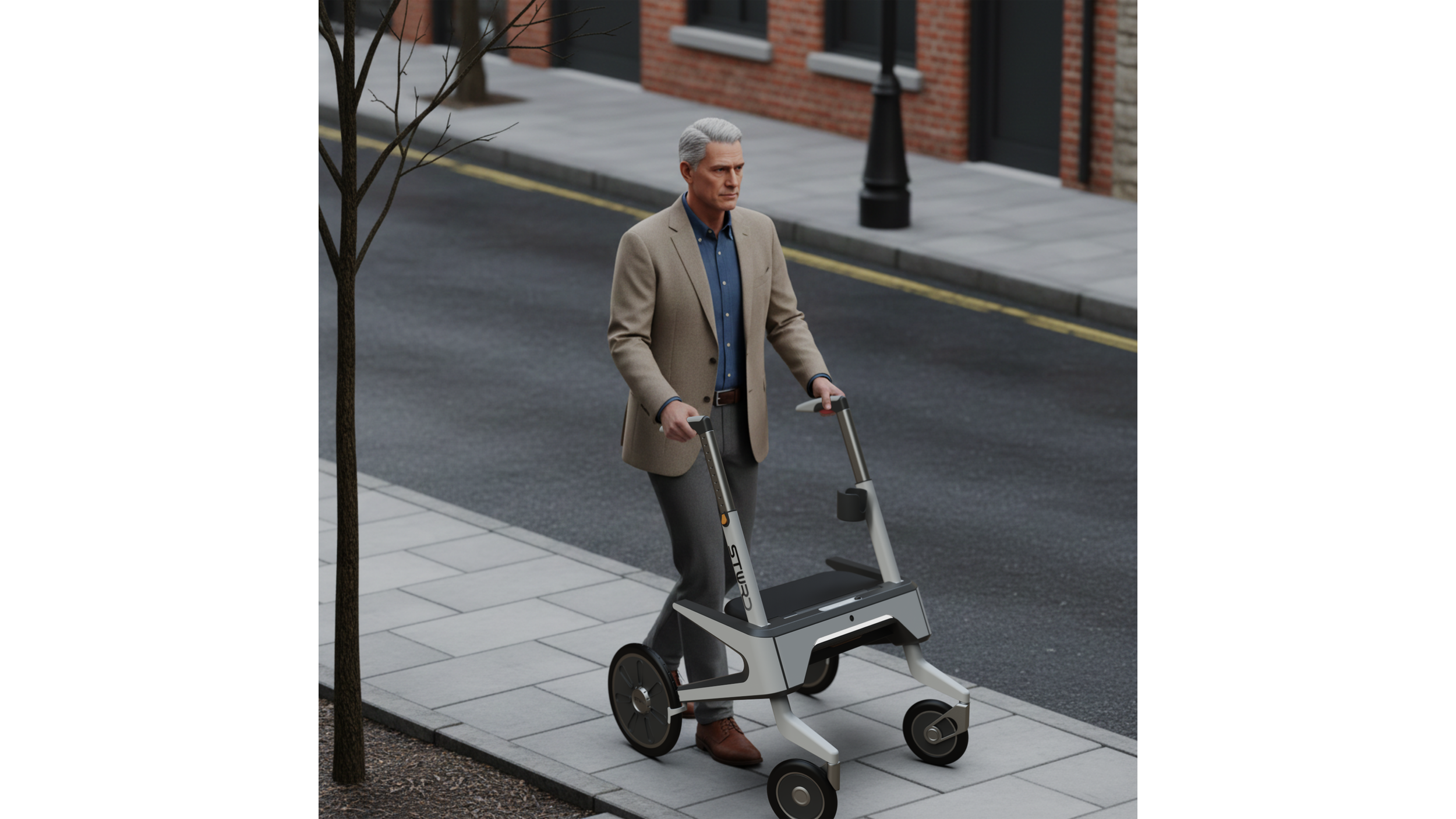
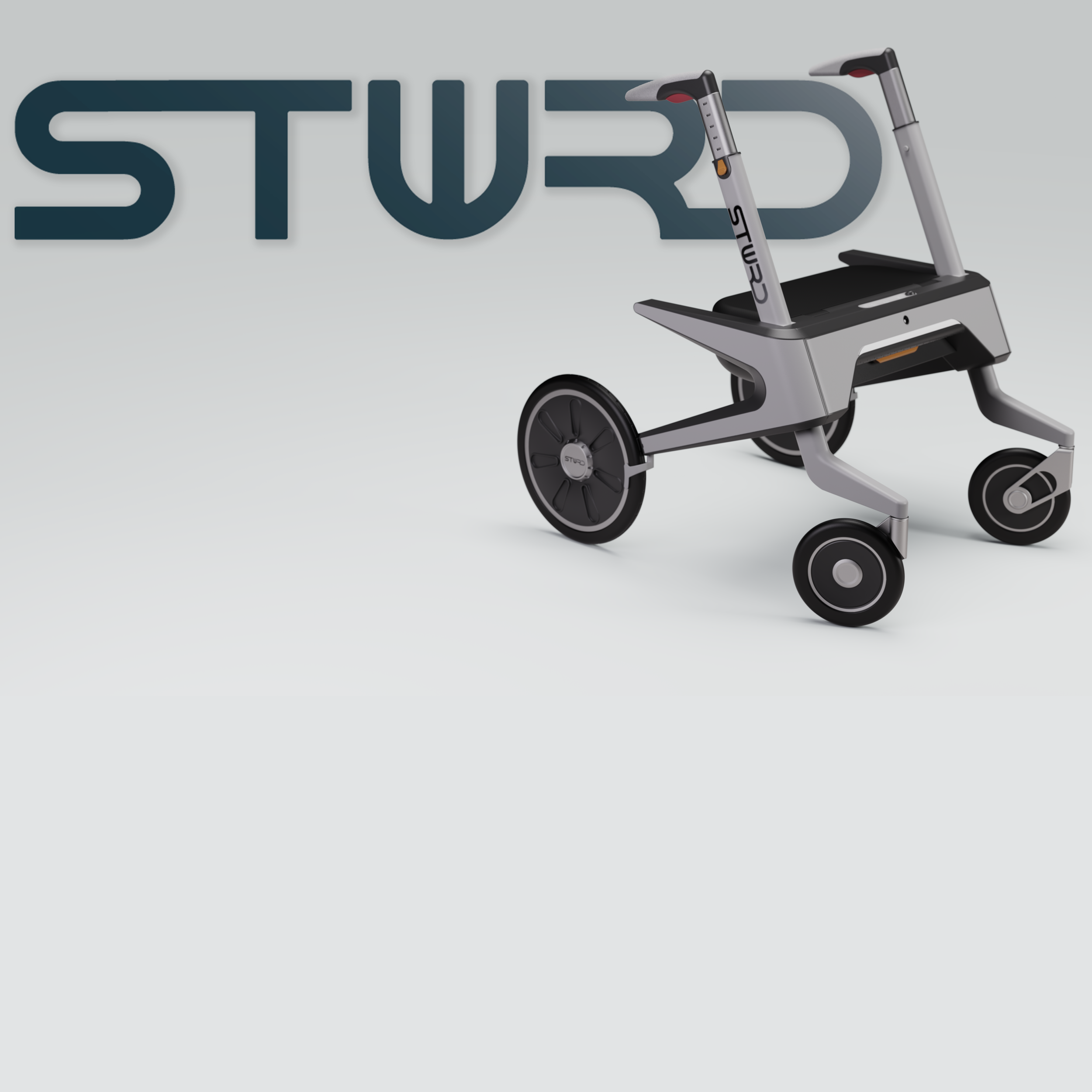
STWRD is an intelligent, electric mobility aid designed to support safer and more confident movement for the modern day 65+ User. It enhances user independence through onboard monitoring, responsive assistance on slopes, and real-time updates for caregivers. By combining smart sensing with intuitive support, STWRD raises the standard for modern walkers.
We have “smart” everything, phones, homes, cars, all the way down to toasters.
The question for me was, “Why not a smart walker?”
Walkers give basic support but fail to promote safety, independence, or confidence. Without features for emergencies, navigation, or reducing stigma, users are left vulnerable, worried, and socially isolated.
How might a smart walker be designed to improve mobility, safety, and emotional well being for older adults and mobility impaired individuals?
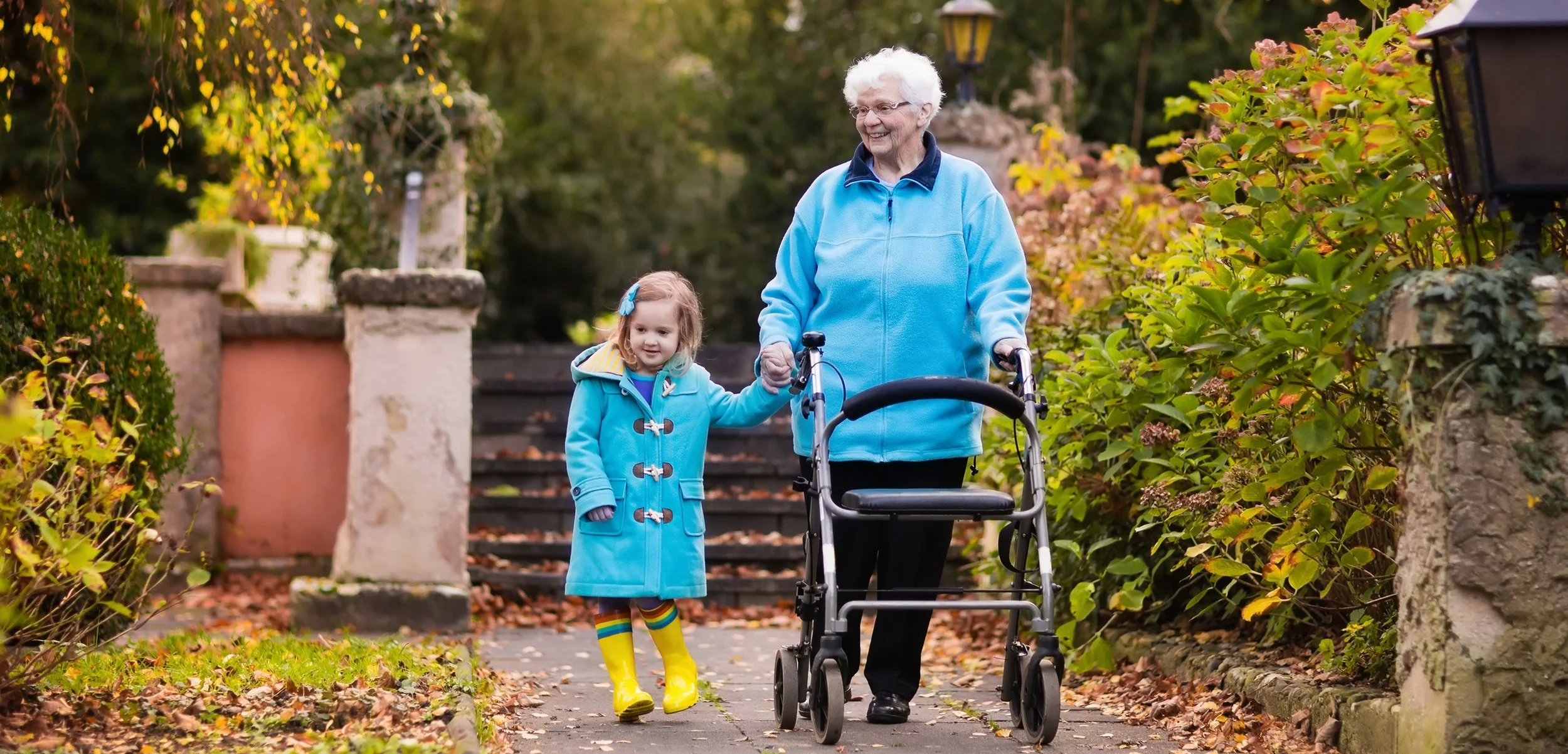
Research into walker design starts with users.
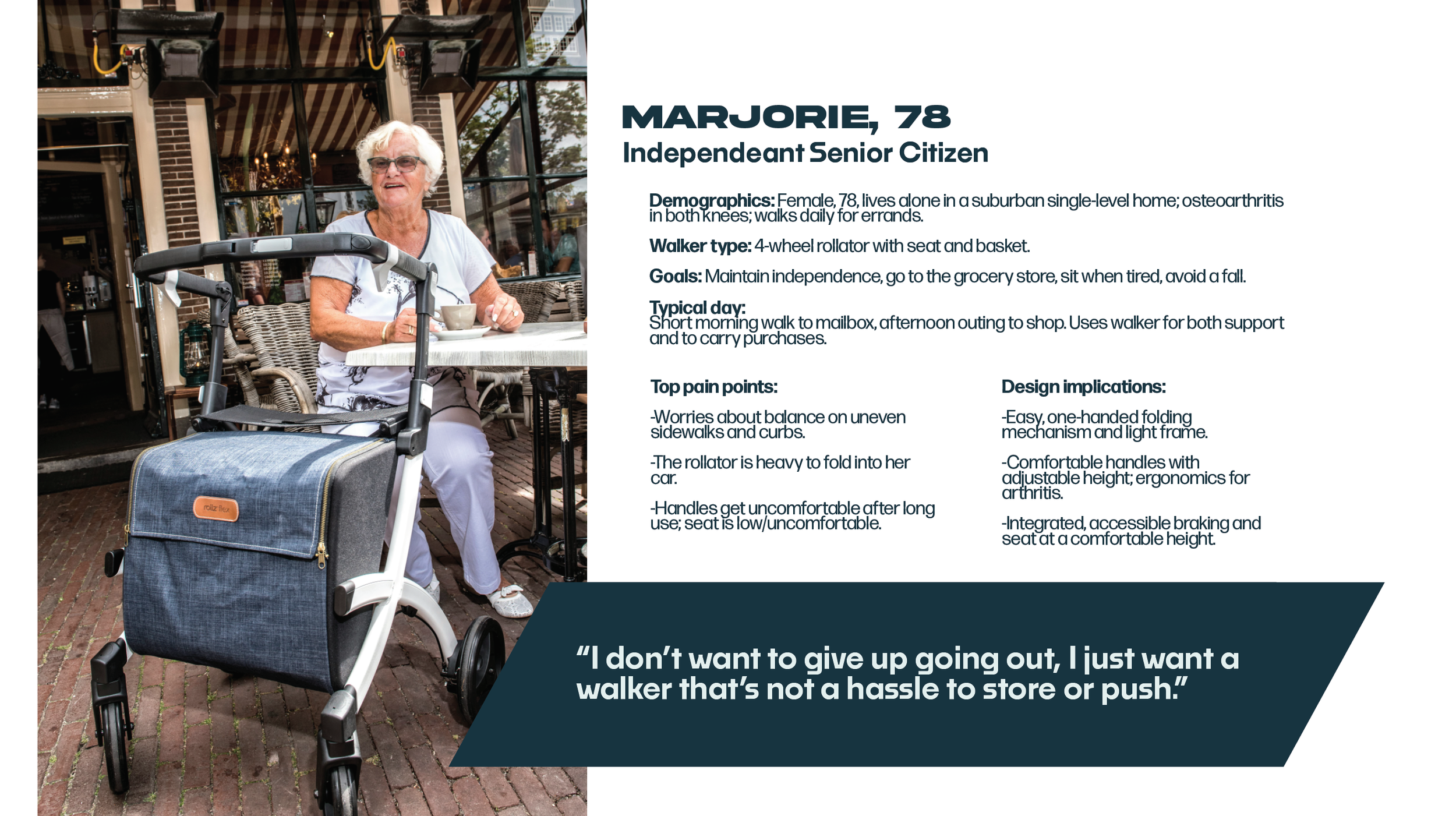
Seniors (65+)
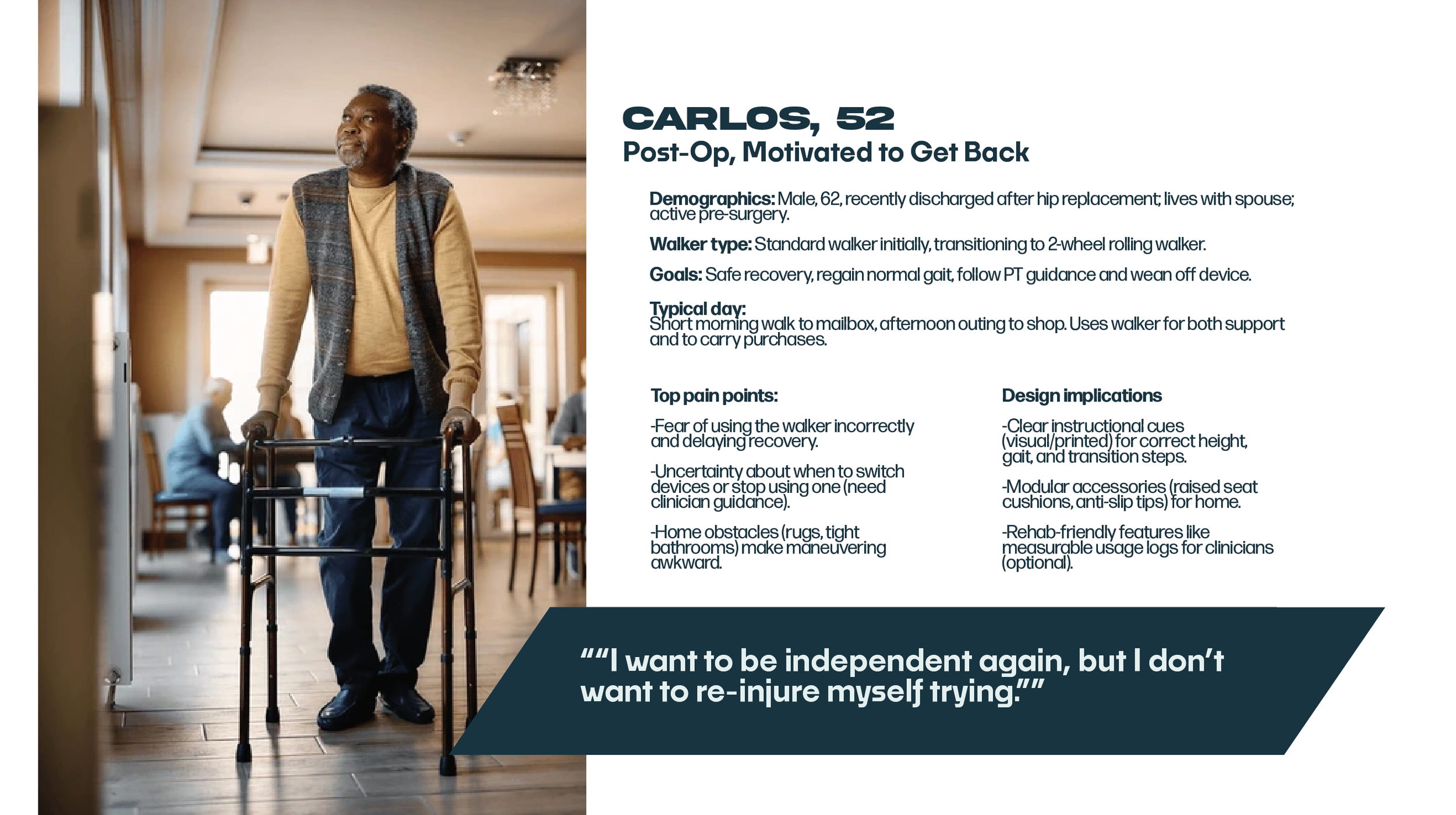
Post-Op Users
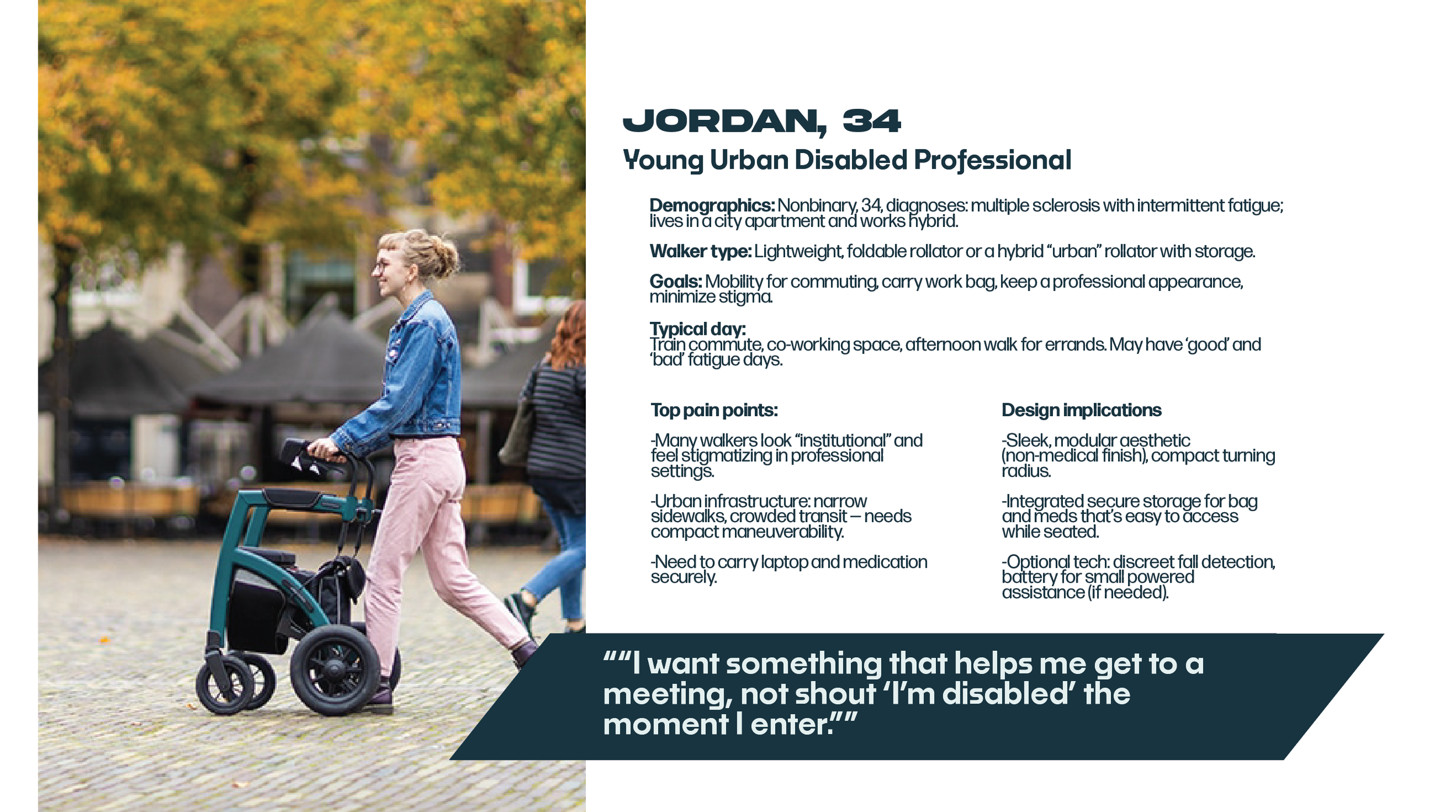
Young Disabled
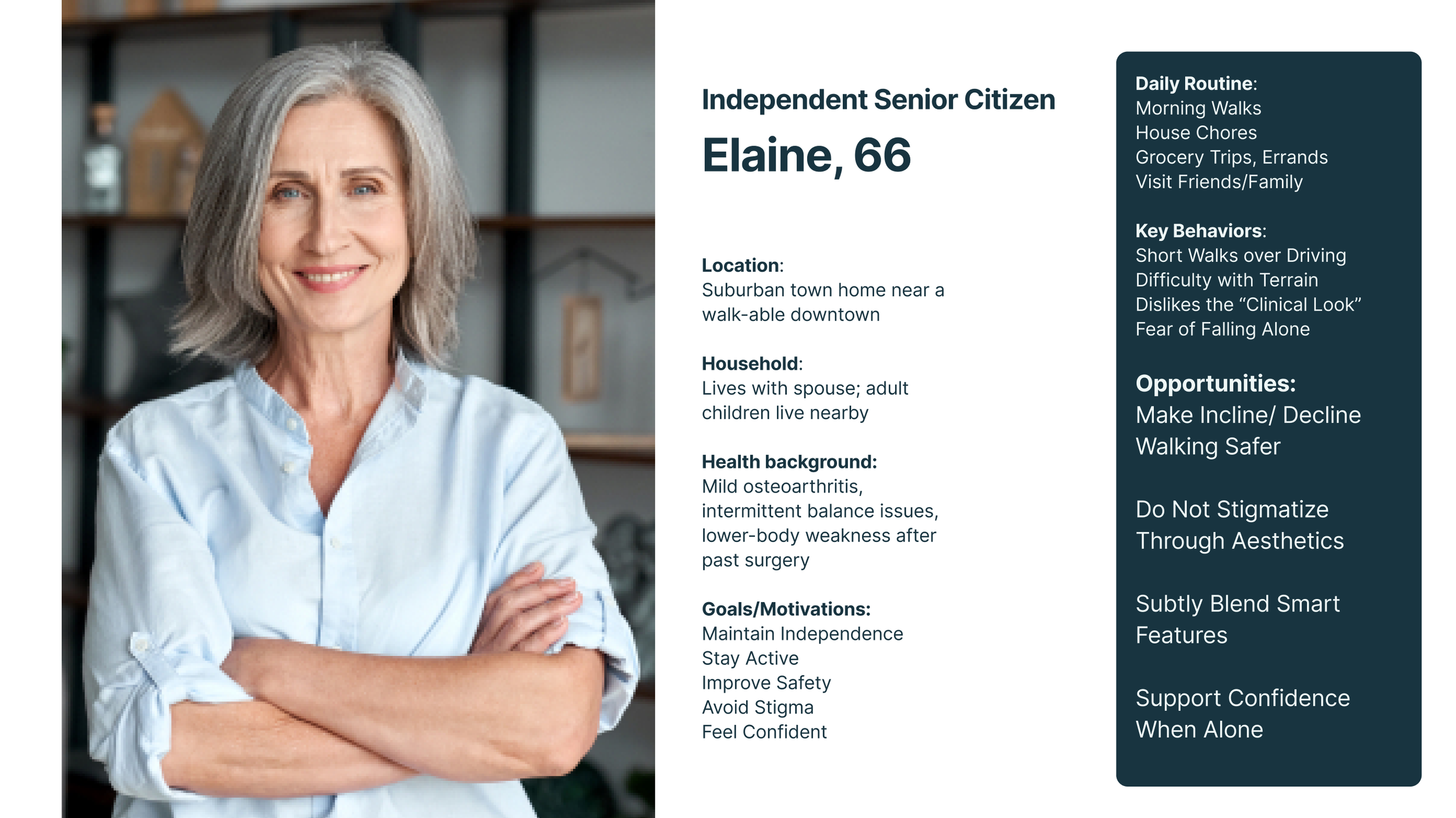
The target audience quickly became the 65+ user group, as they account for the highest percentage of mobility aid use. Not only that the 65+ year old community of the next decade will be far more tech savvy than the seniors we all know and love now.
What does the market of mobility aids offer currently?
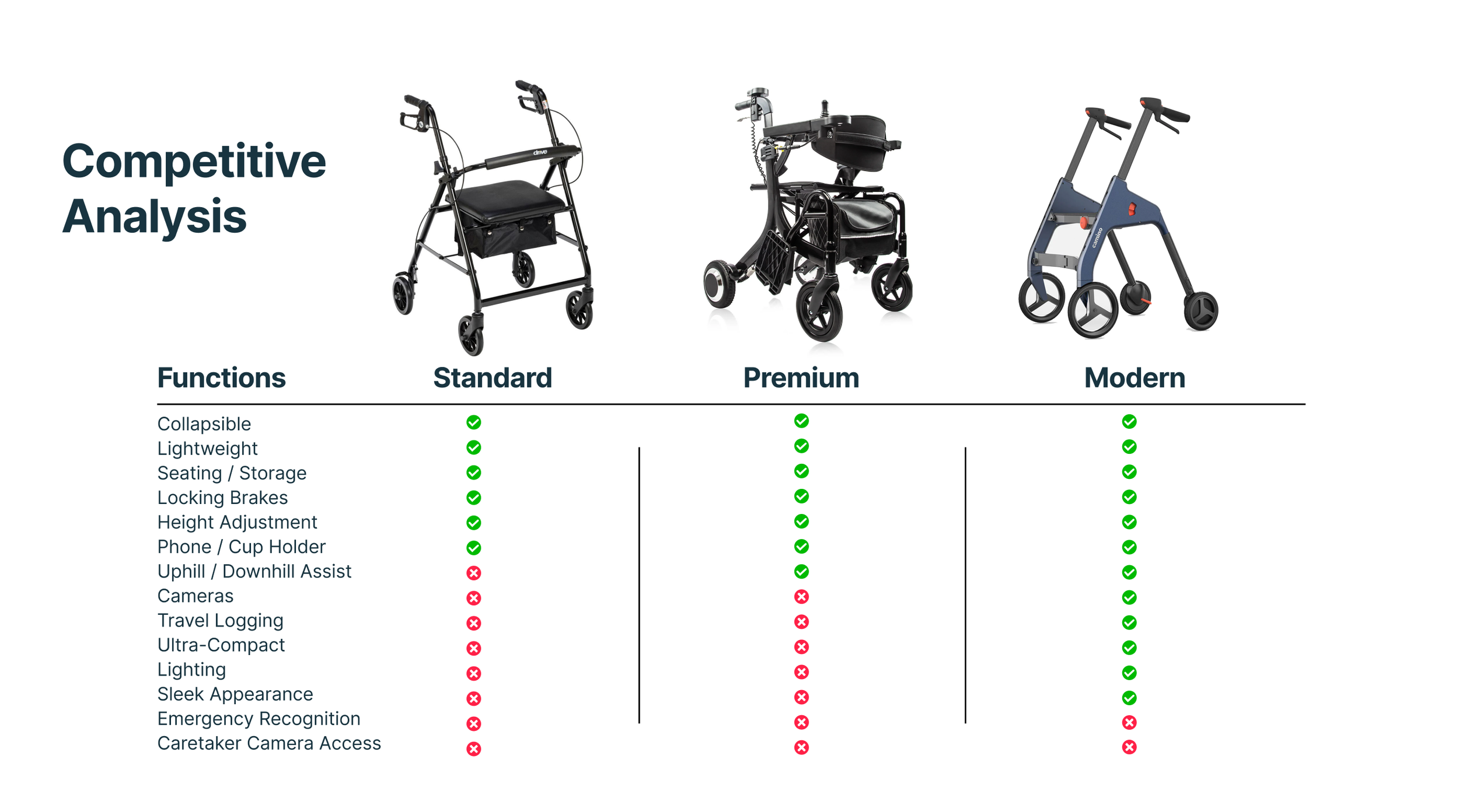
To be effective, my design would need to offer everything found in the standard walker market. Beyond that if it is going to offer innovative features, it should also include some premium features as well.
User Needs

Stability

Independence

Convenience
Functional Requirements

Market Standards

Compact Ability

Light Weight
Innovation Opportunities

Power Assisted
Harness modern EV features to improve mobility and increase independence

Live Video Monitoring
Camera integration will provide direct check ins to caretakers and loved ones allowing increased safety and peace of mind

Emergency Awareness
Through the use of AI recognition within camera feed, user emergencies can be recognized and responded to promptly
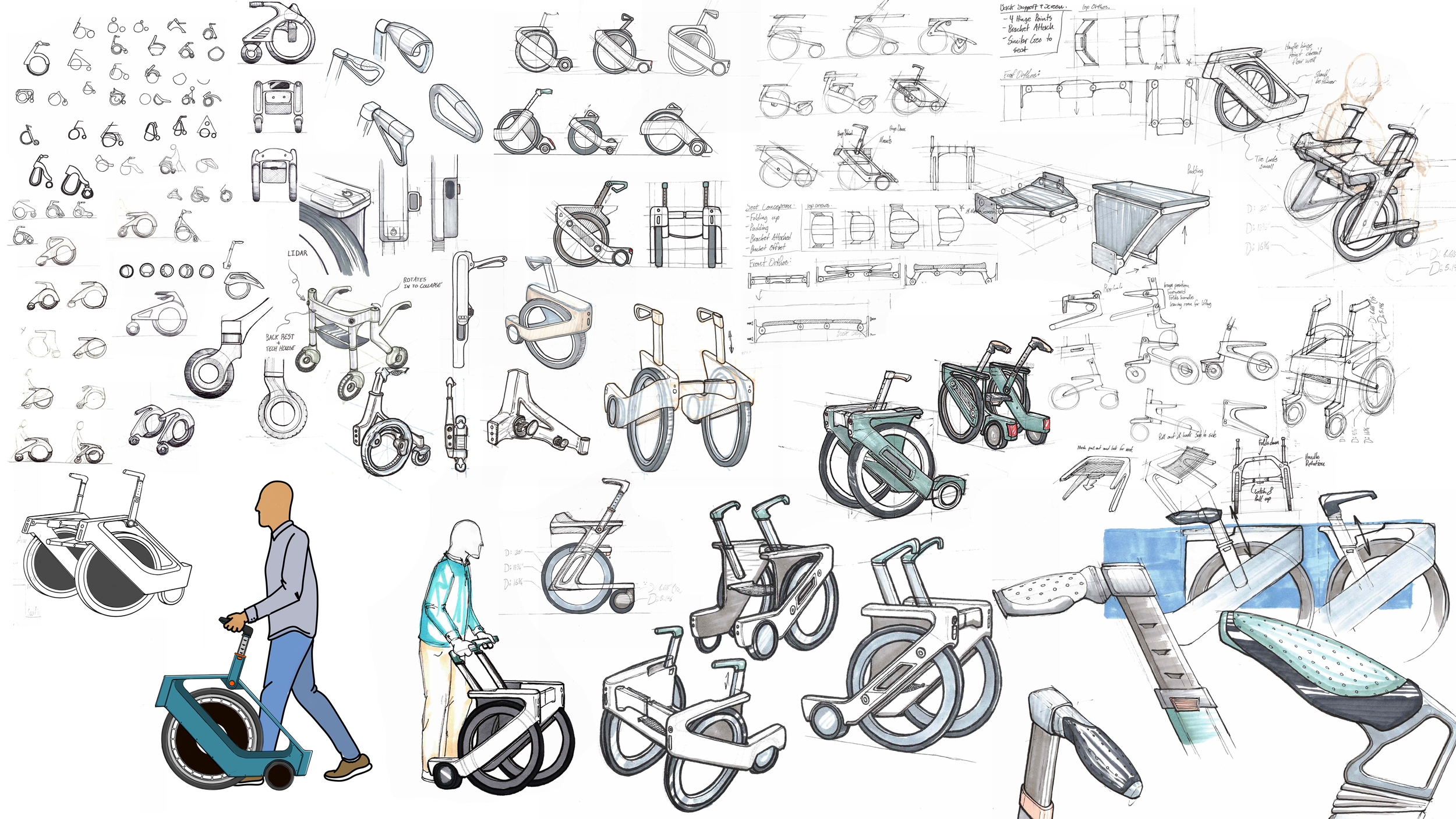
In my early sketching I was rather focused on having a large diameter front wheel, in order to have increased torque and ease the overall ride quality of the walker.
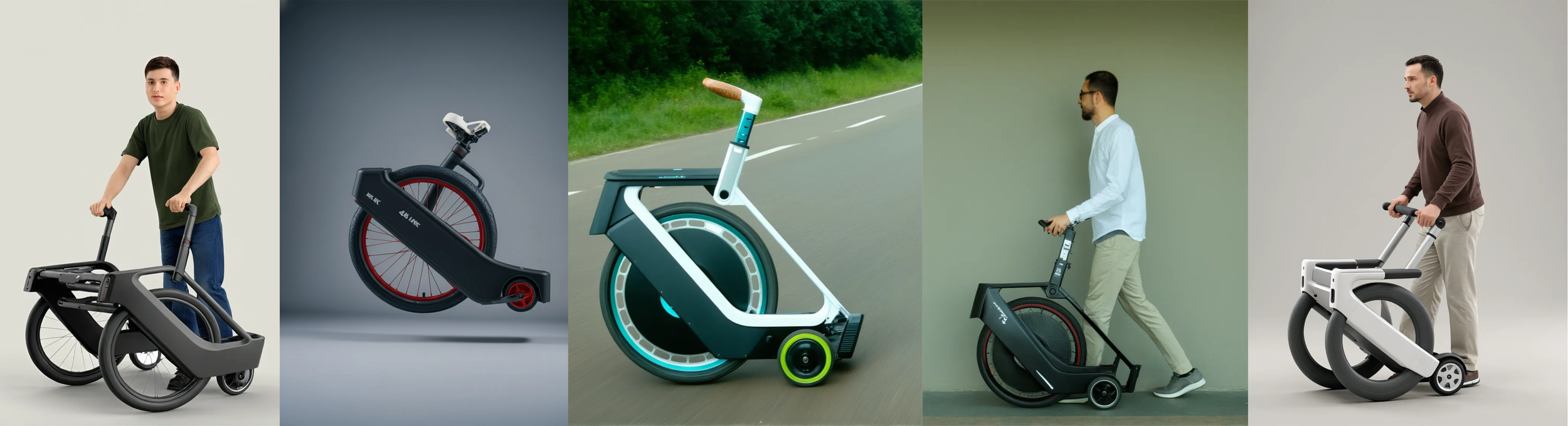
As sketching went on through the project I used Vizcom as a means of turning sketches into to renders to try and further visualize colors and materials.
AI has trouble with details, and it showed that weakness throughout the process. My skills are still needed it seems.
Small sketch modeling of the designs helped visualize functions and sizing for the walker that would later prove very helpful.
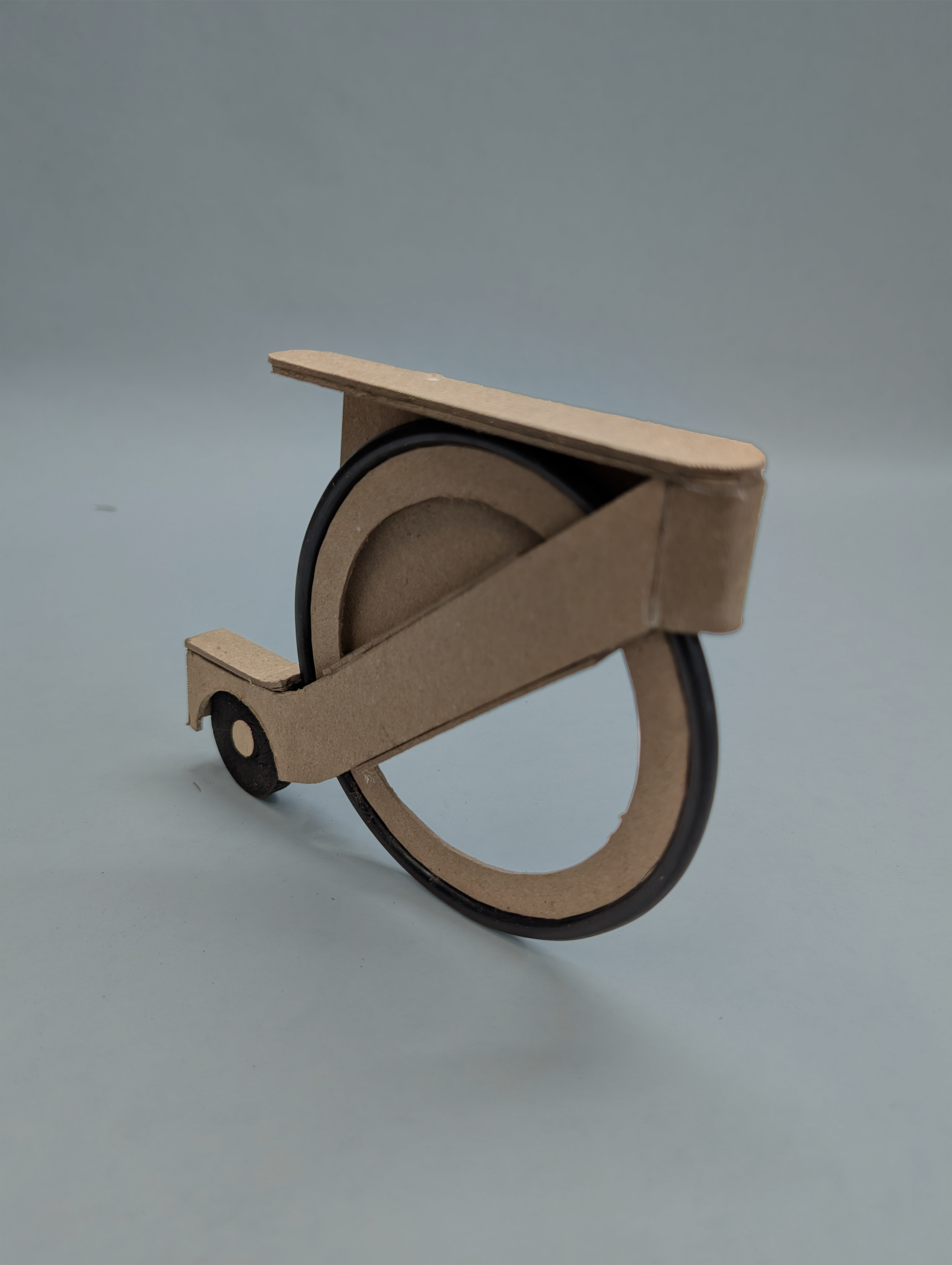
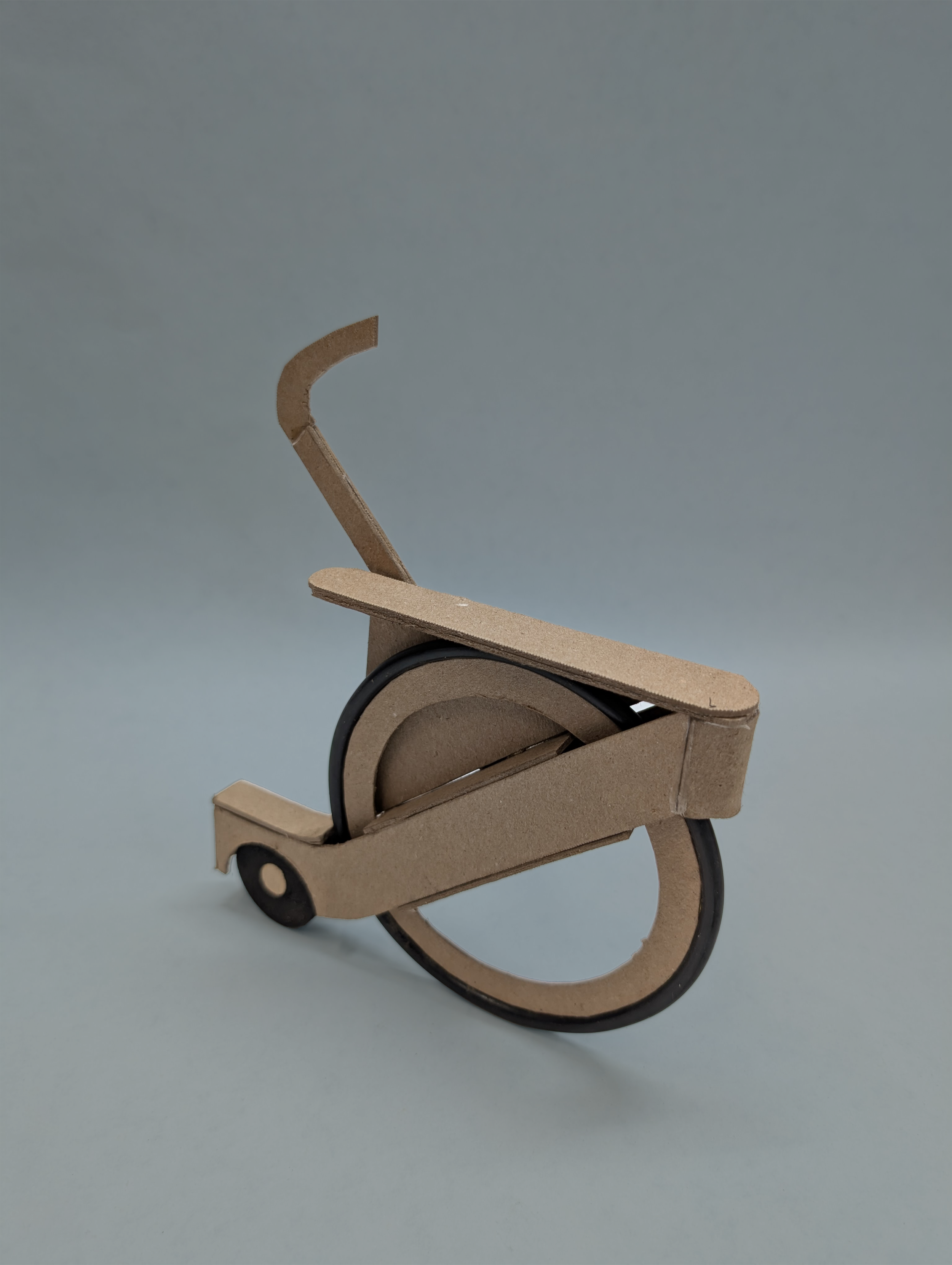
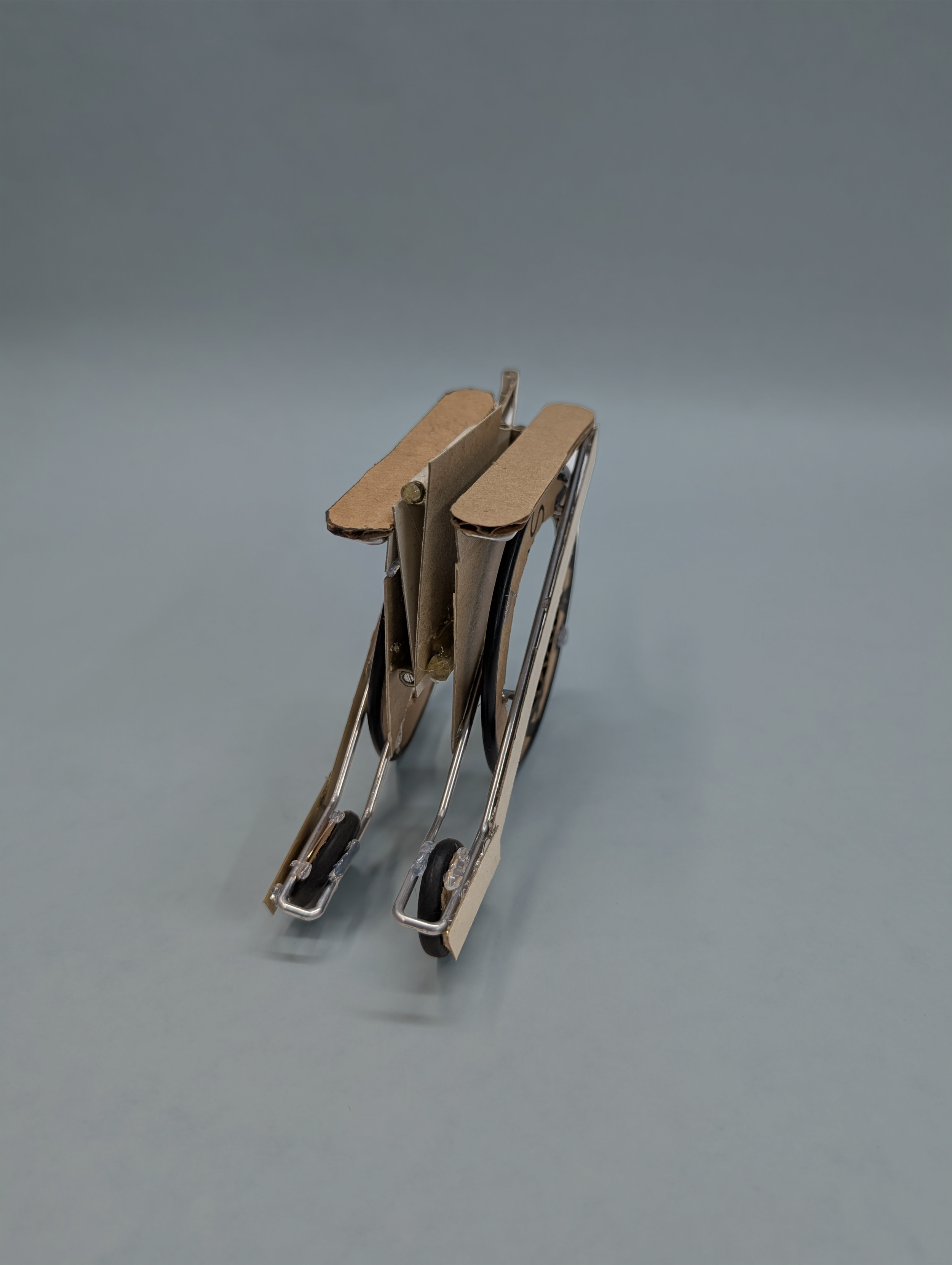
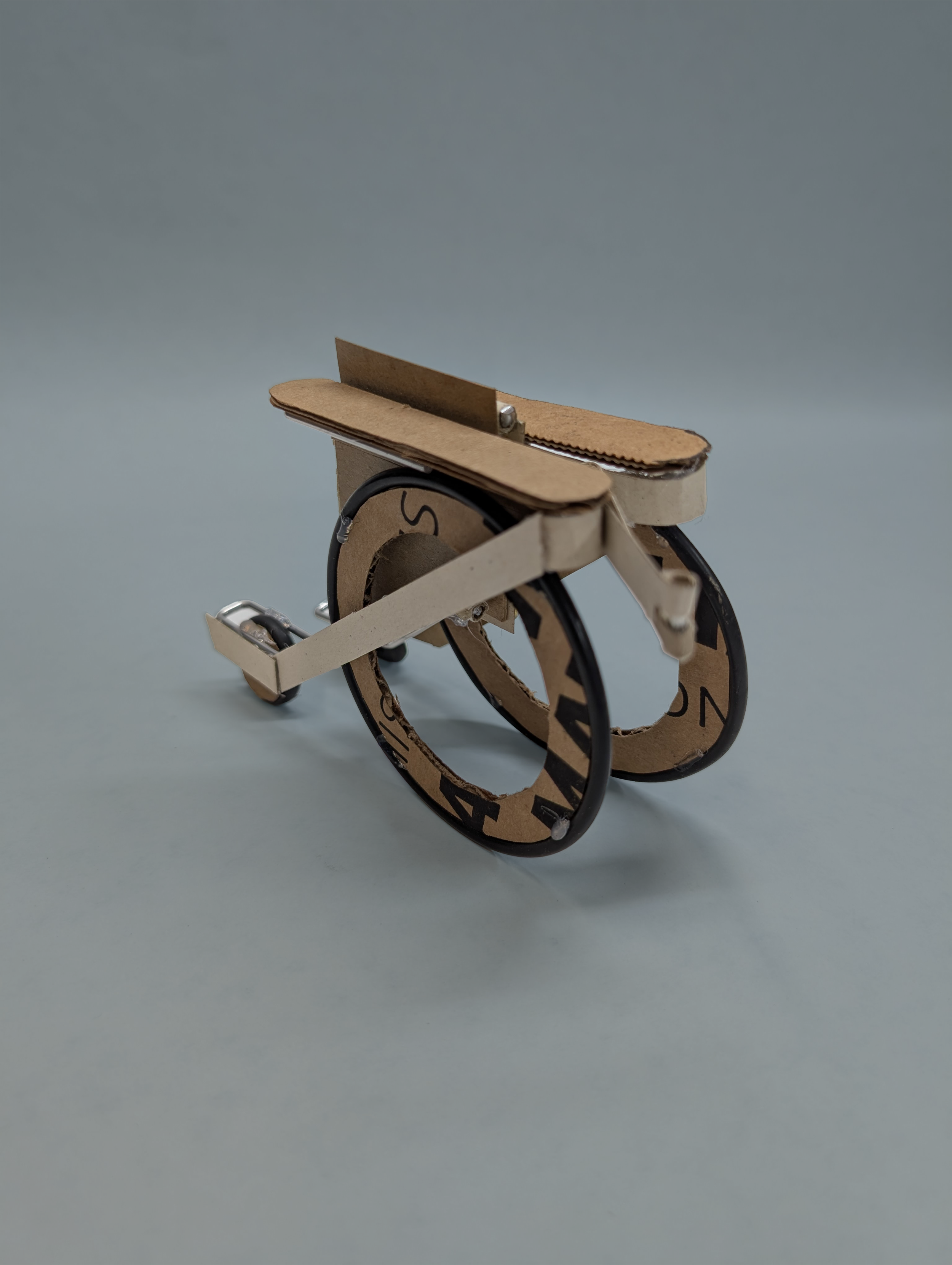
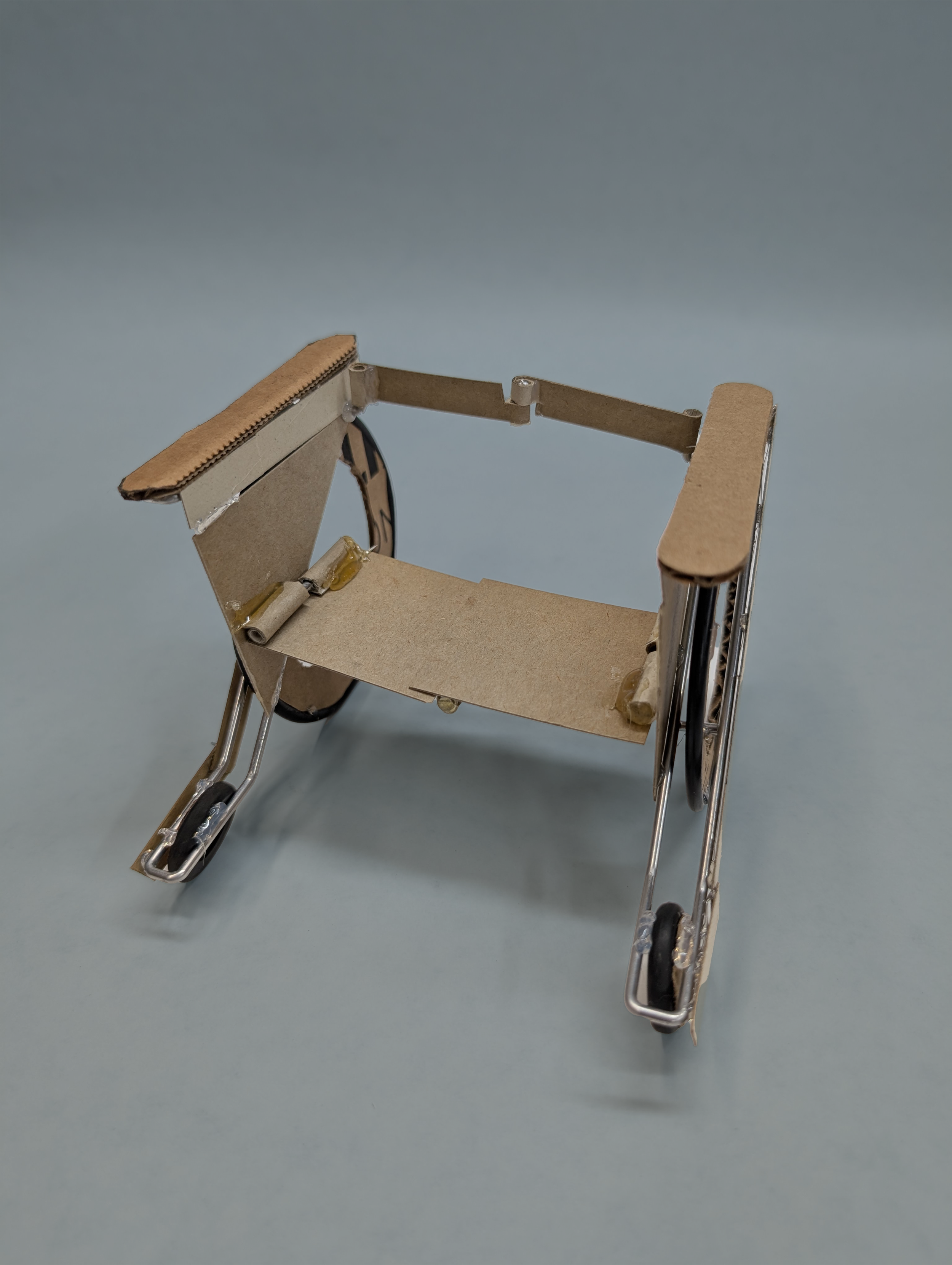
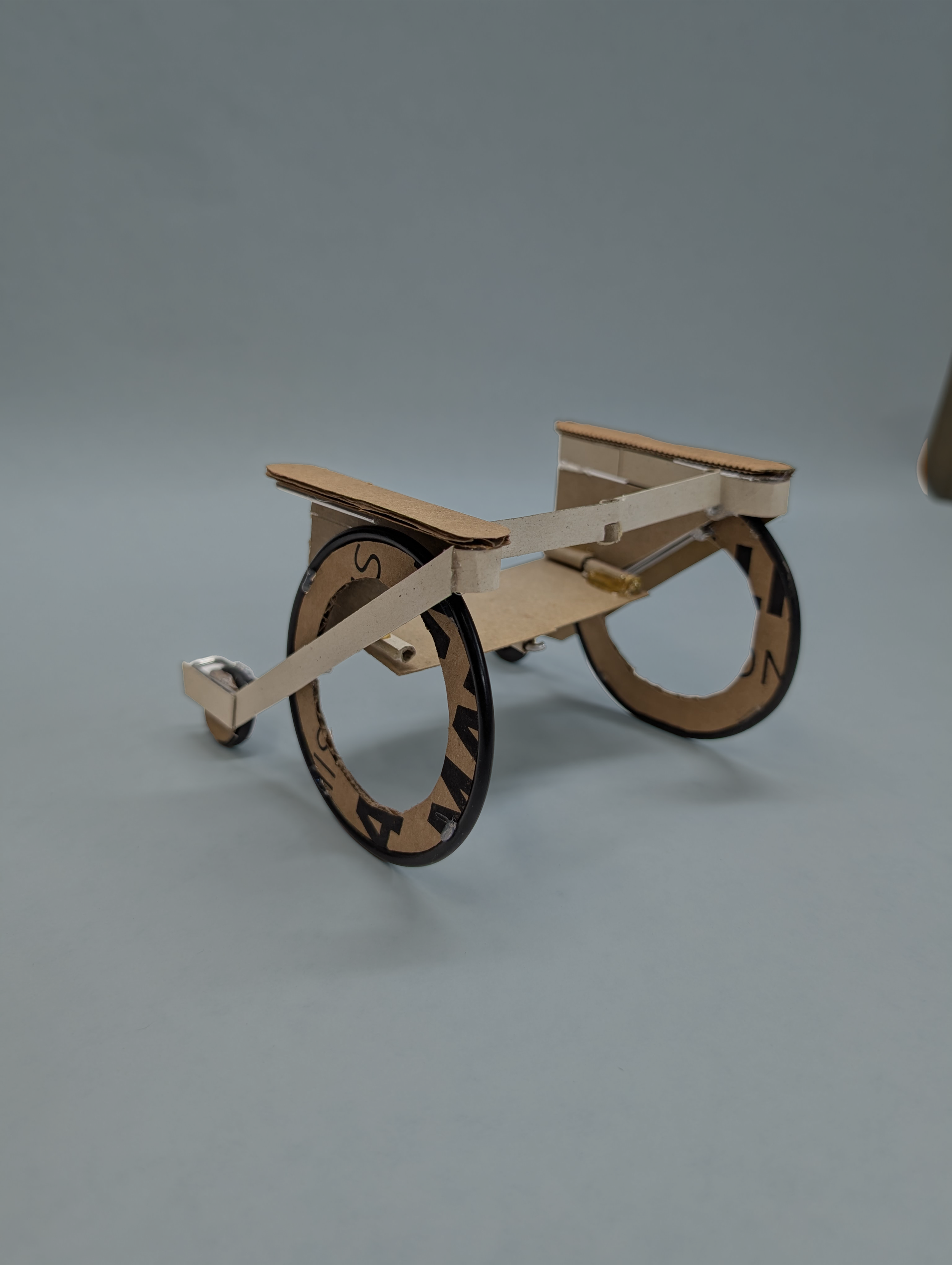
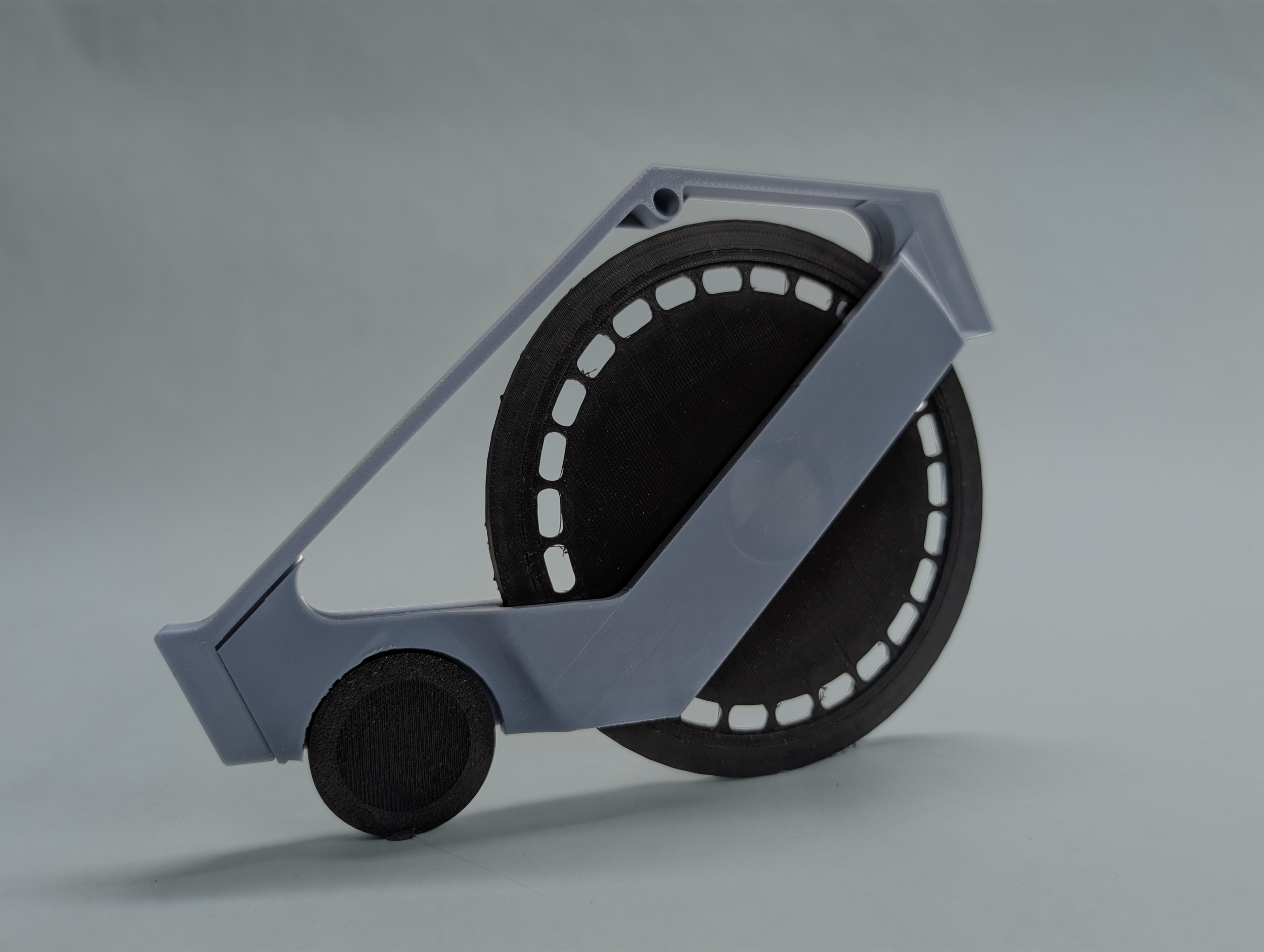
After enough modeling and sketching and early rough CAD modeling, I found that the large front wheel design was simply not the way forward. It would struggle to be light weight, hard to make compactible, require too many moving parts, limit mobility, be confused for a wheel chair, and more.
So I returned to some forms that better represented contemporary walker designs.
The new approach, was largely inspired by the common walker layout, with aesthetic nods to road bicycles that would be refined in the final design.
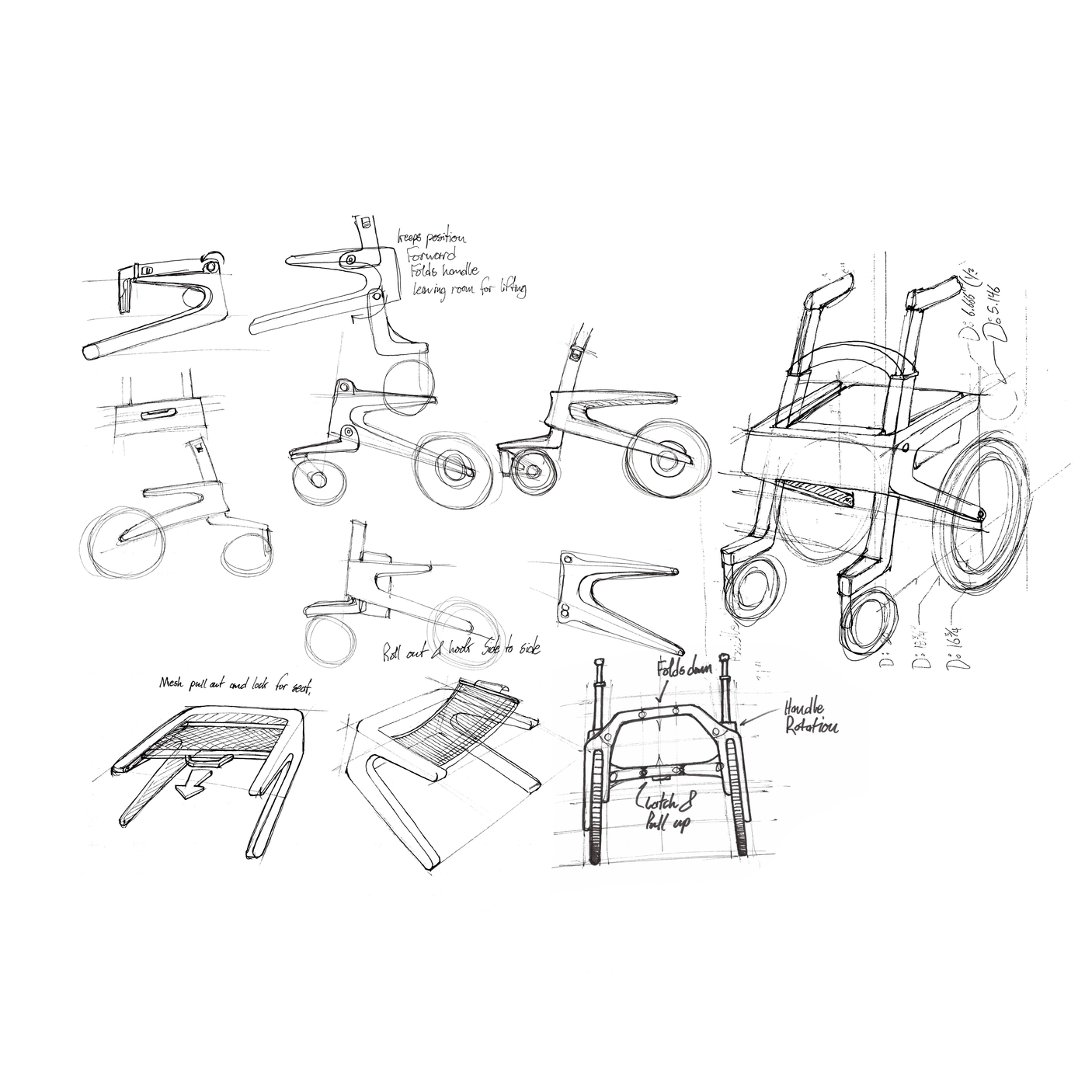
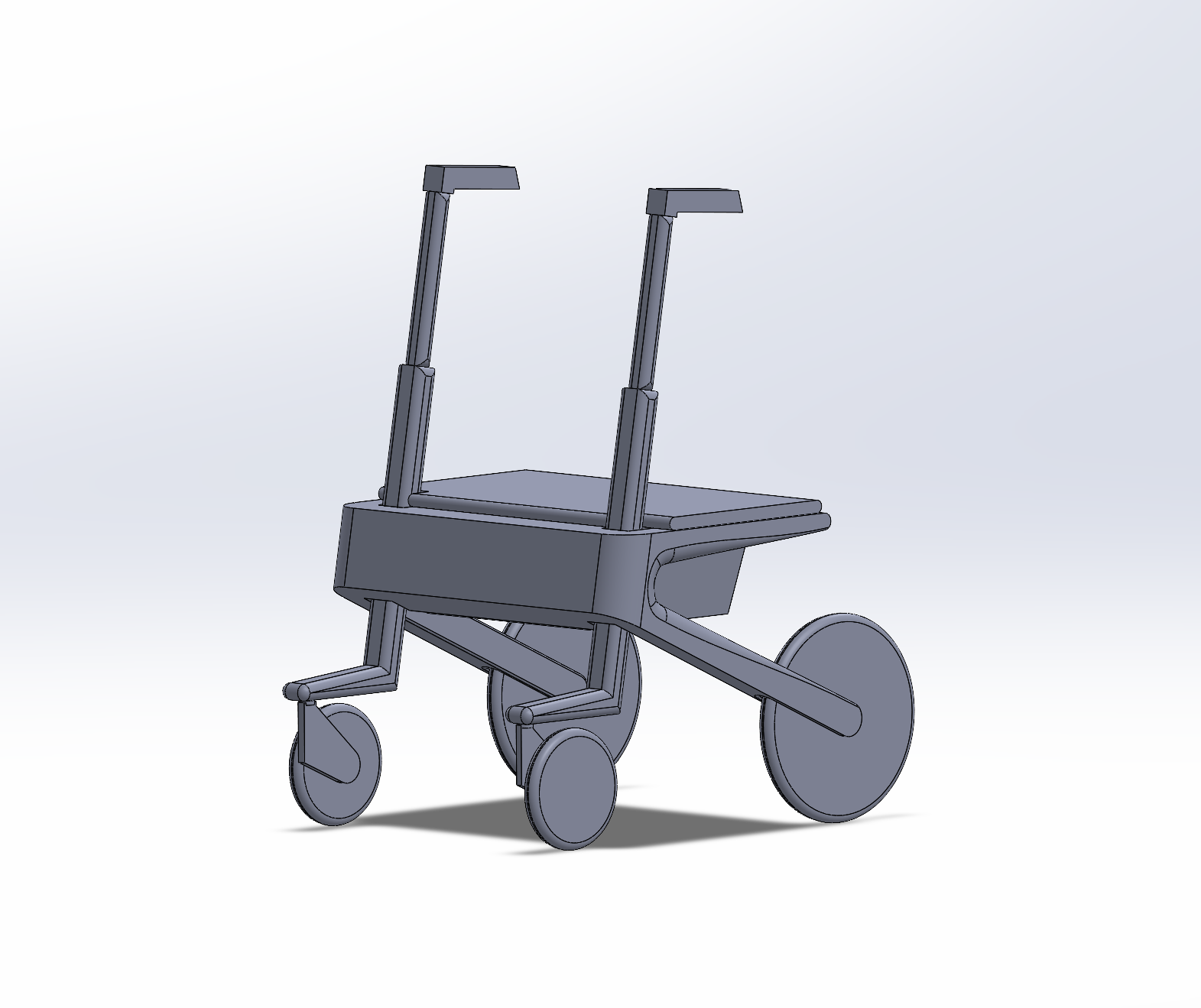
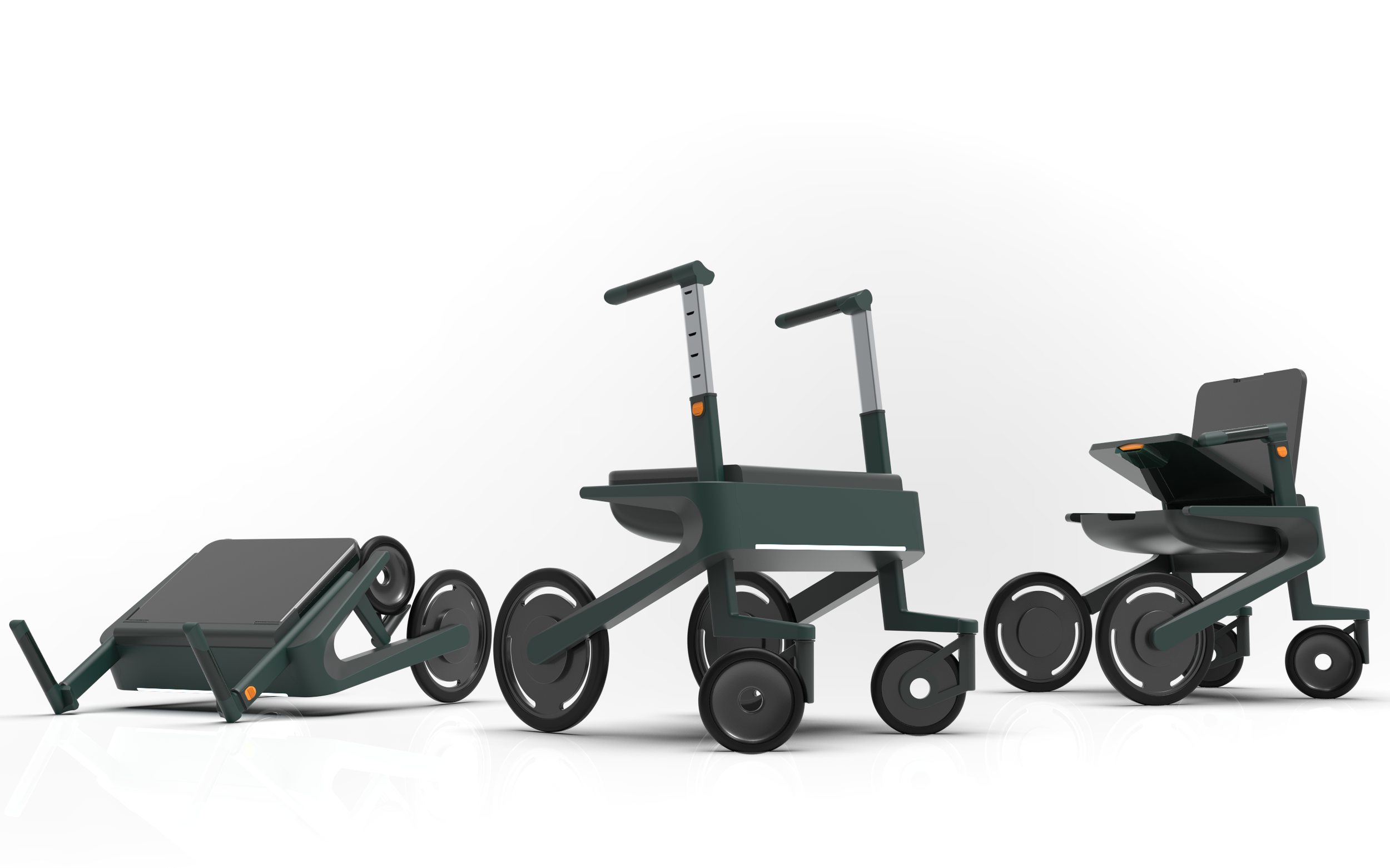
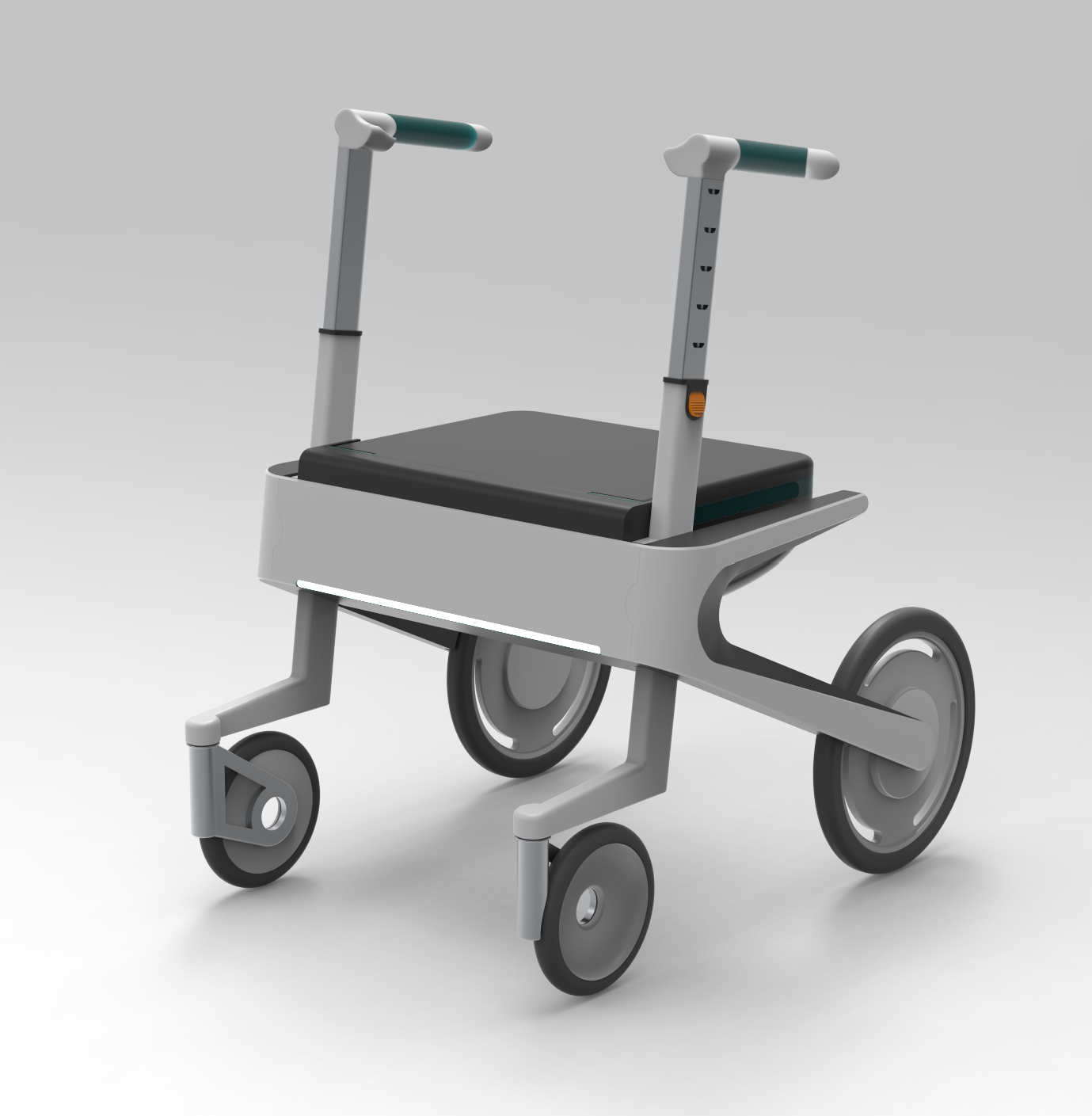
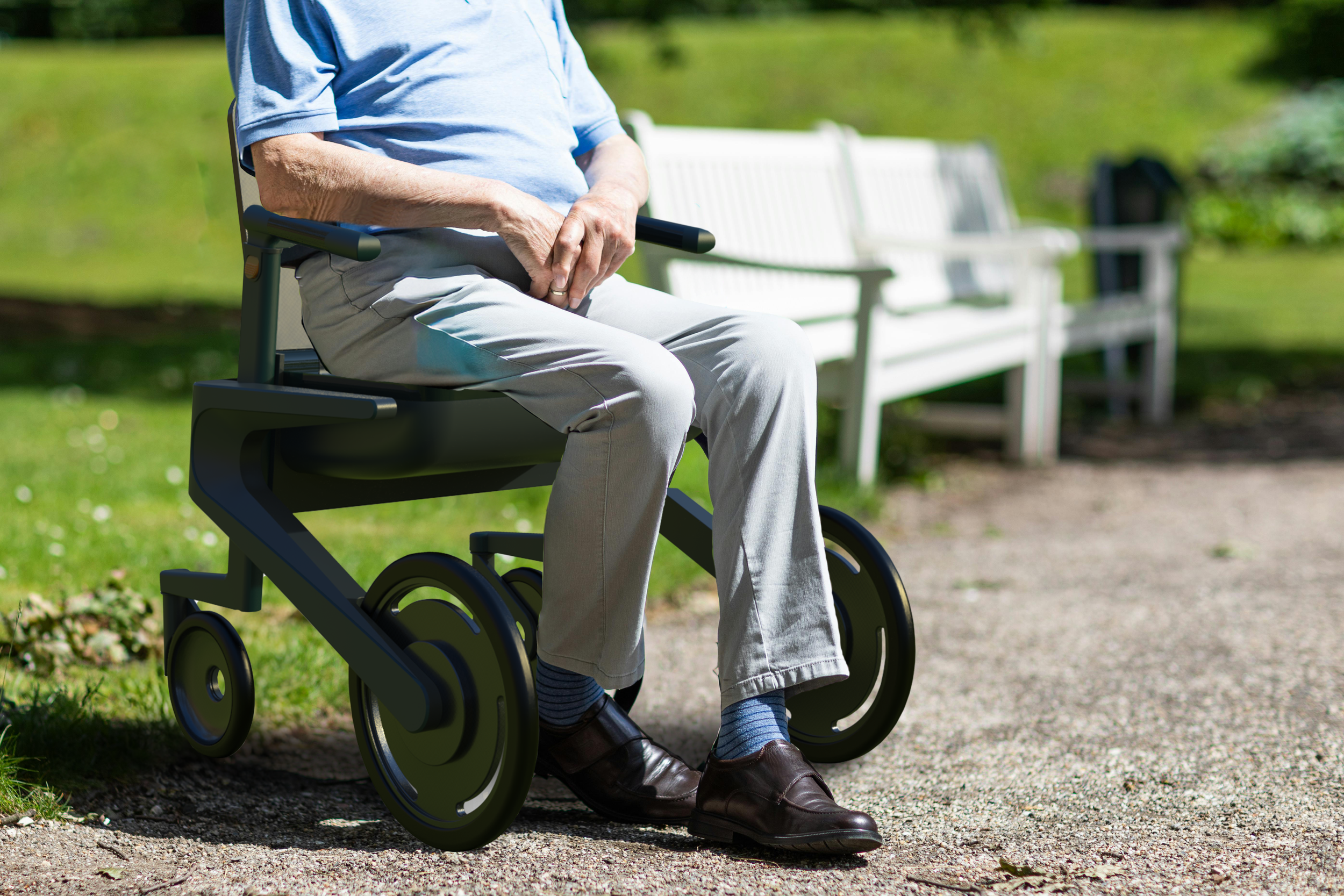
Returning to some basic sketches and doing some quick CAD models made the design feel much more grounded. The reason walkers follow this style of layout is because it works. The front wheels swivel allowing a more natural pivoting point for the user. I retained larger diameter wheels in the rear of the walker to maintain a higher torque and overcome uneven surfaces.
After this it would be time to create the final version of STWRD.
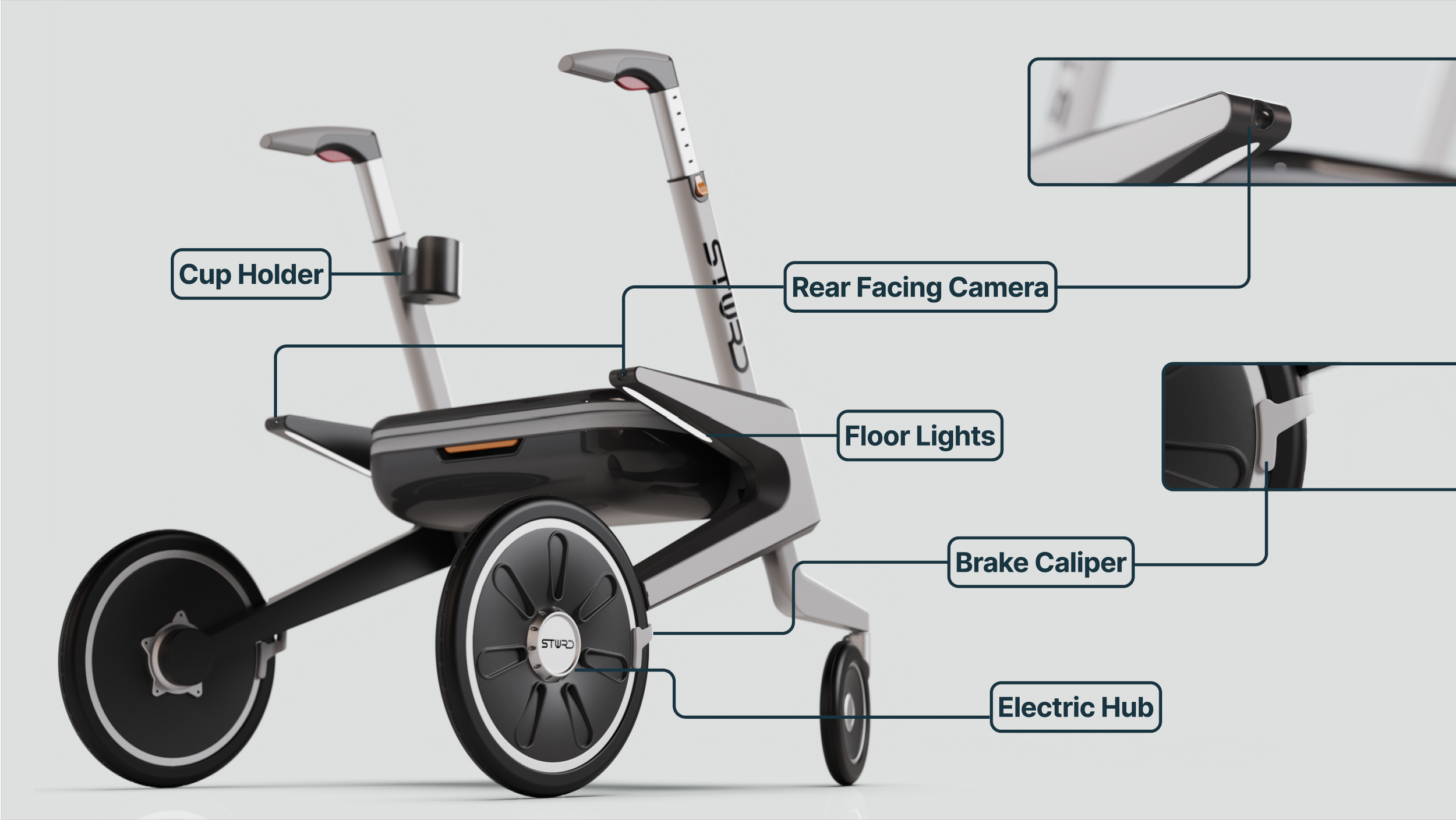
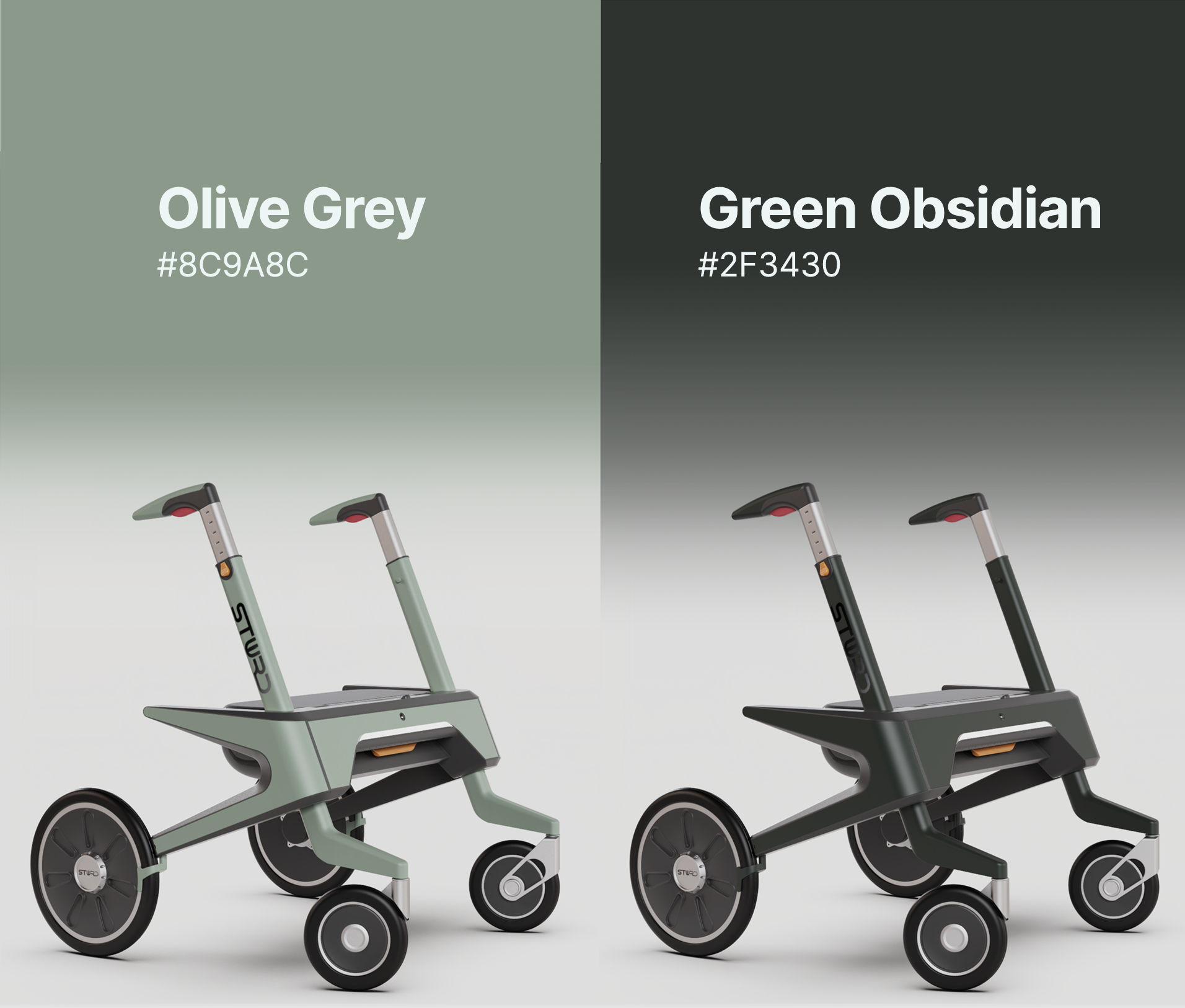
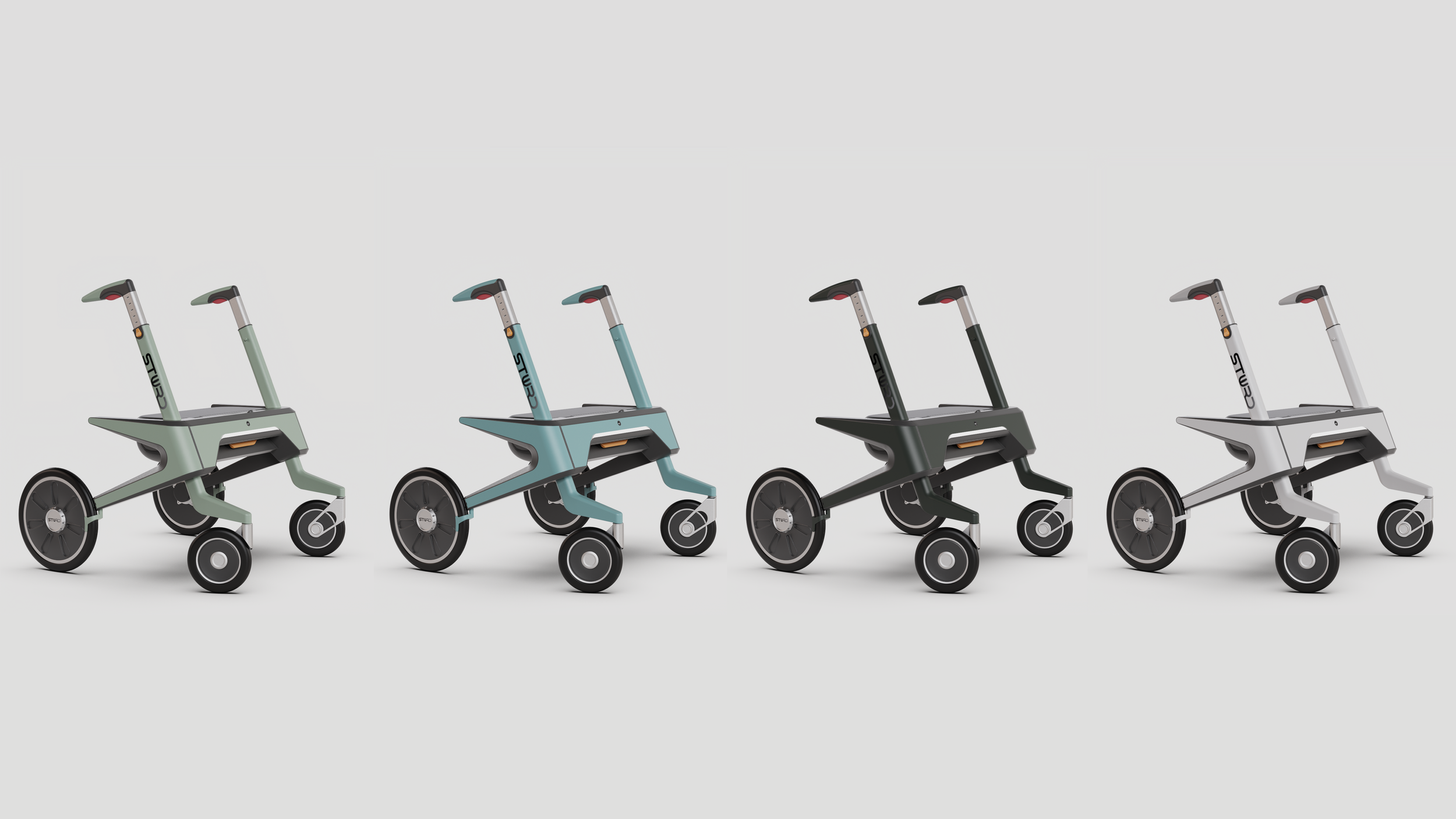
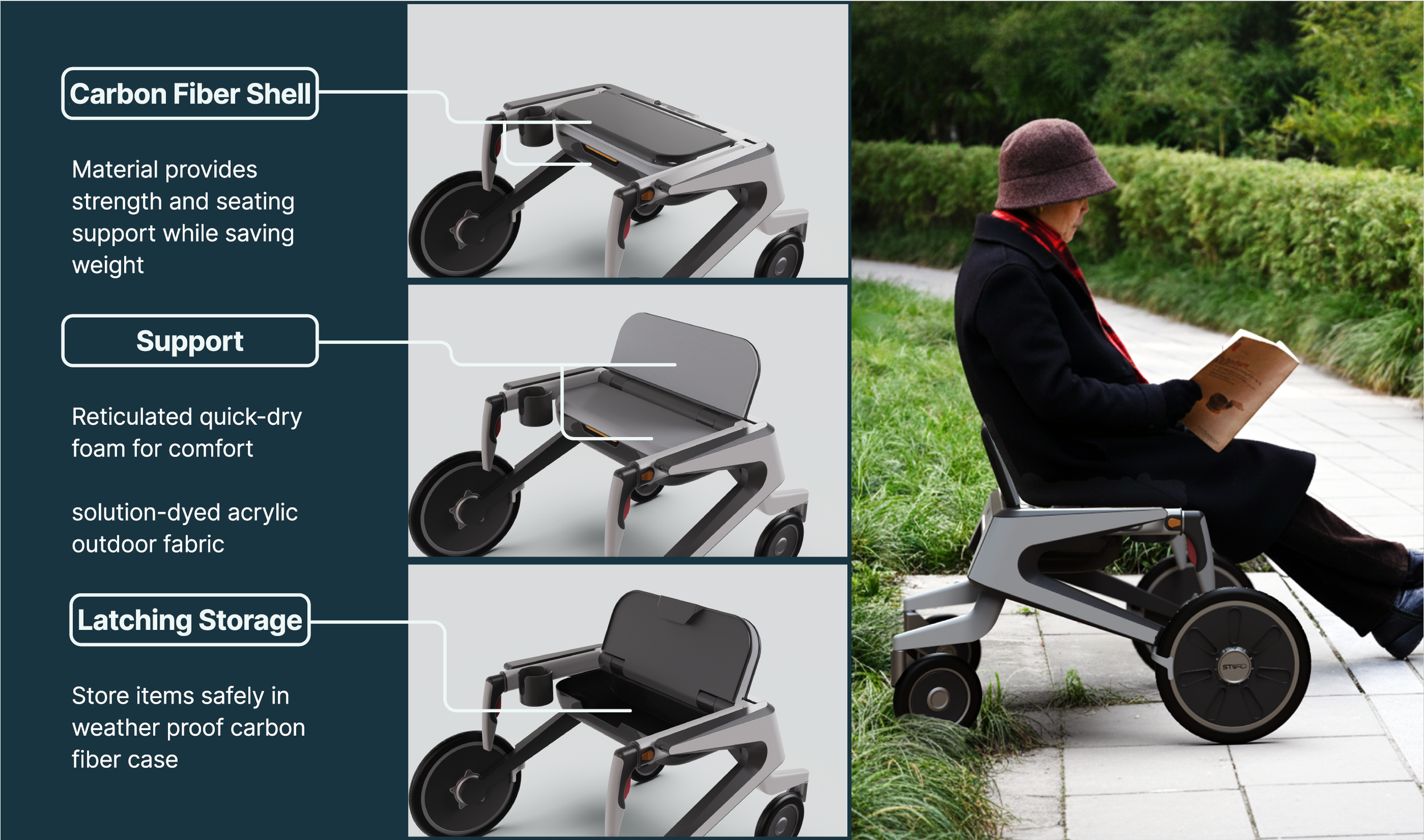
The STWRD is outfitted with features found in standard walkers, such as seating, storage, cup / phone holder, and a manual breaking system. However some things that set it apart are the rear electric assisted wheels, Cameras and nighttime lighting system. In the back we have floor lights to illuminate the feet of the user and reduce tripping hazards.
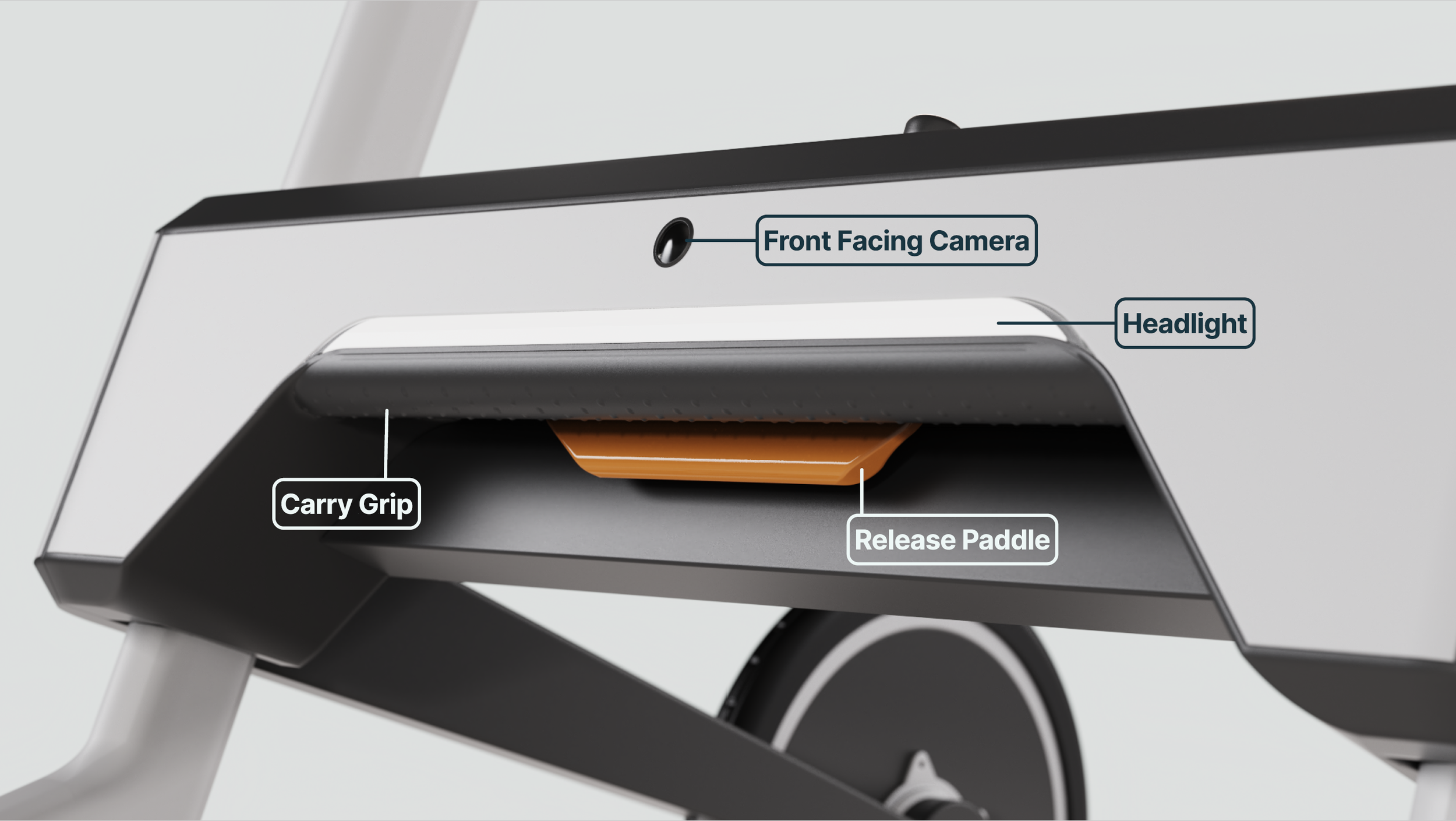
The front of STWRD is home to a single camera, a main front facing headlight for nighttime walks, a release handle which collapses the walker and a carry grip.
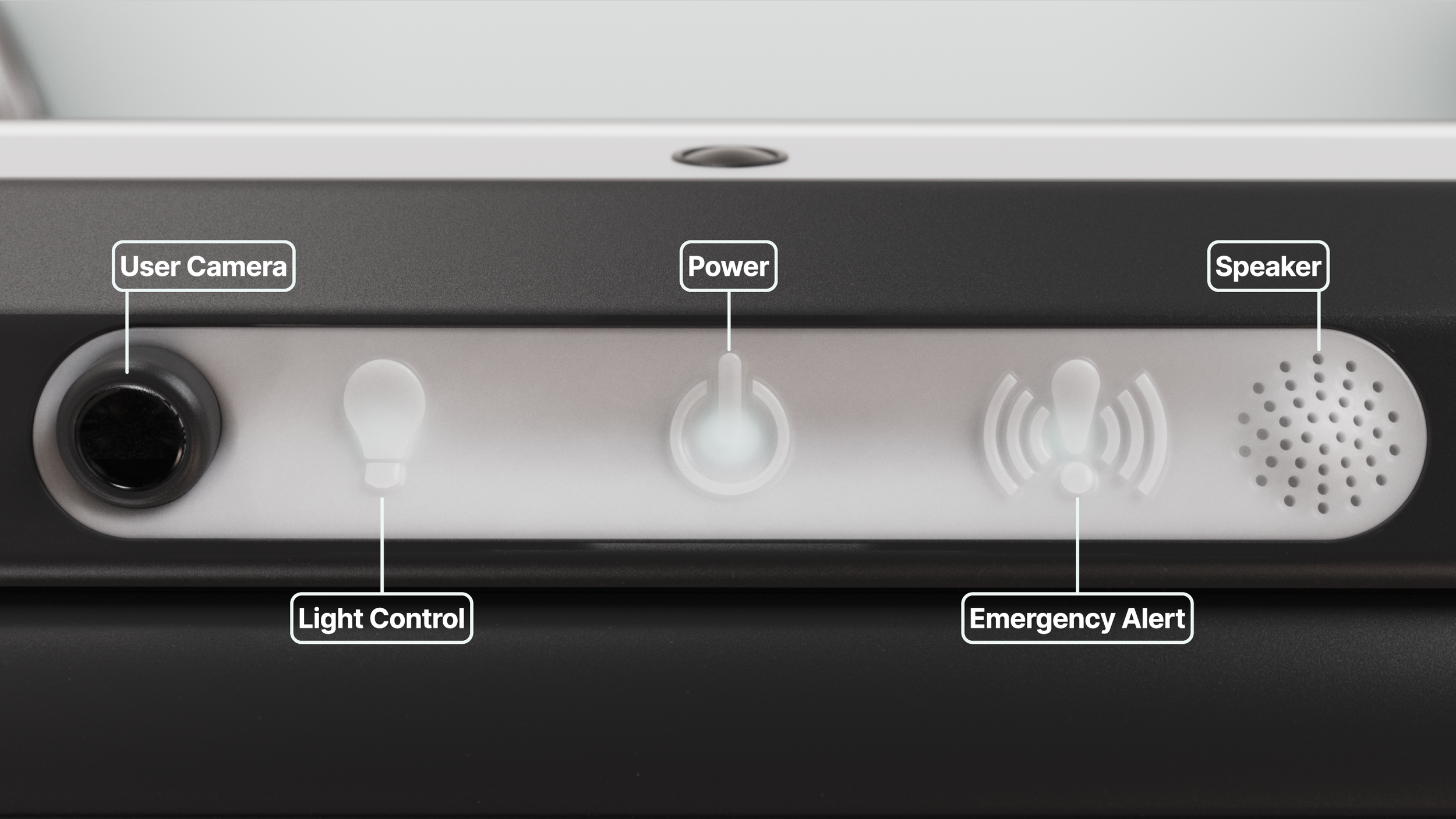
On the top face of the walker is a simple control panel. There you will found a power button, an alert button to call for help, a light button for headlights and floor lights, as well as a user facing camera and speaker. These are inset to avoid accidental touches and covered in silicon to create a soft touch while also weather proofing the internals.
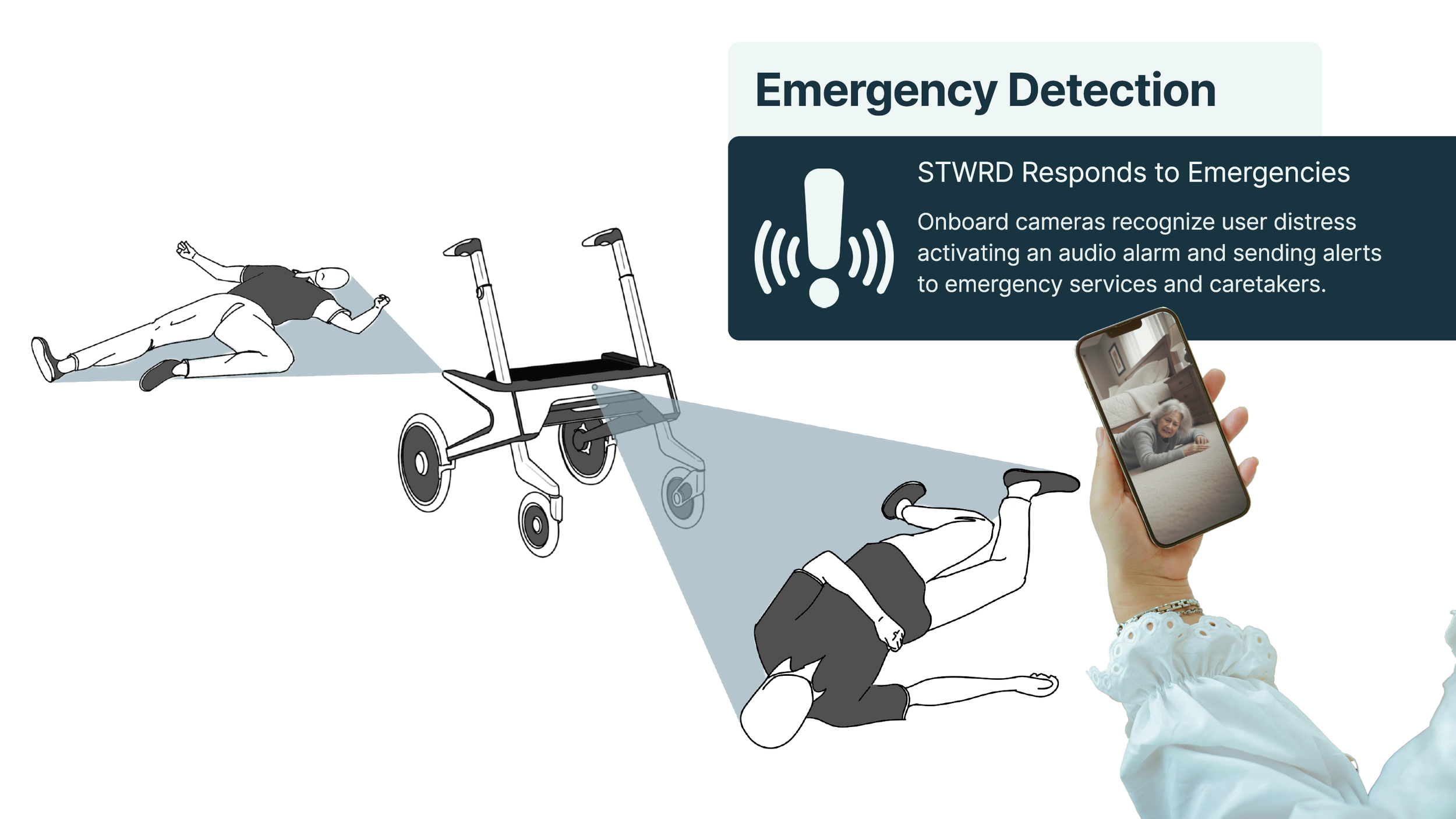
Emergency detection is a major selling point of STWRD. The cameras mounted in STWRD could be used for caregivers or family members to check in on the user, but the main purpose is safety. If the user were to fall, which is not at all uncommon for those who use stability tools, the cameras on STWRD have been programmed to recognize distress. As soon as the threat has been detected STWRD will send a distress call through the STWRD app to a caregiver and if there is no answer STWRD will also send a distress notice and location to first responders such as fireman or police. STWRD also allows the user to speak through the device to responders, to insist on urgency or give the all clear.
By getting faster responses to users in distress, STWRD could potentially save lives.
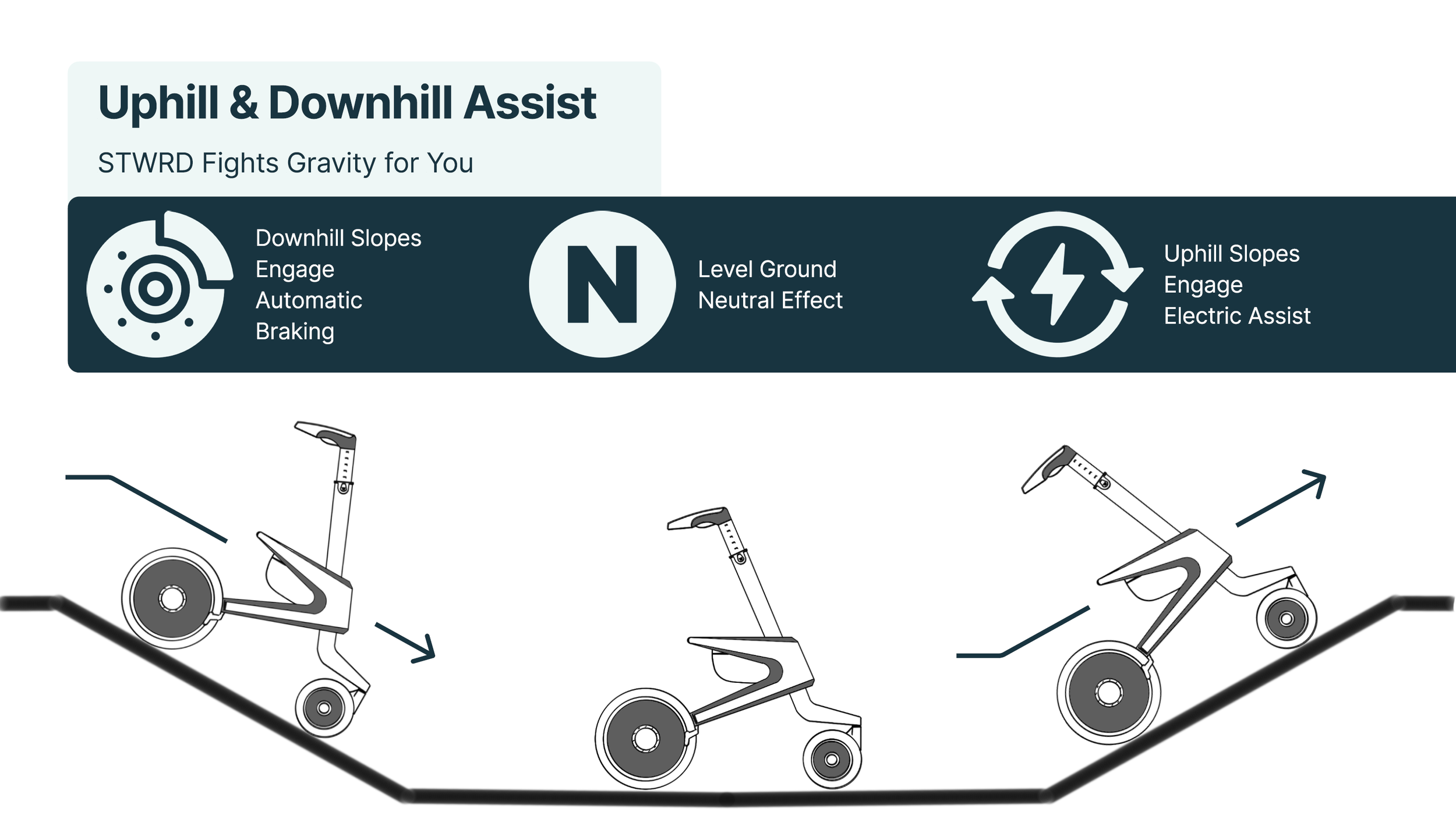
STWRD does not push, or pull the user. The goal is to maintain a stable support for the user on any kind of slope and to respond to the user input to move forward or back by automatically applying either breaks or subtle acceleration. If the user were stop on a slope and step away from the STWRD it would retain it’s position until the user returned and input movement.
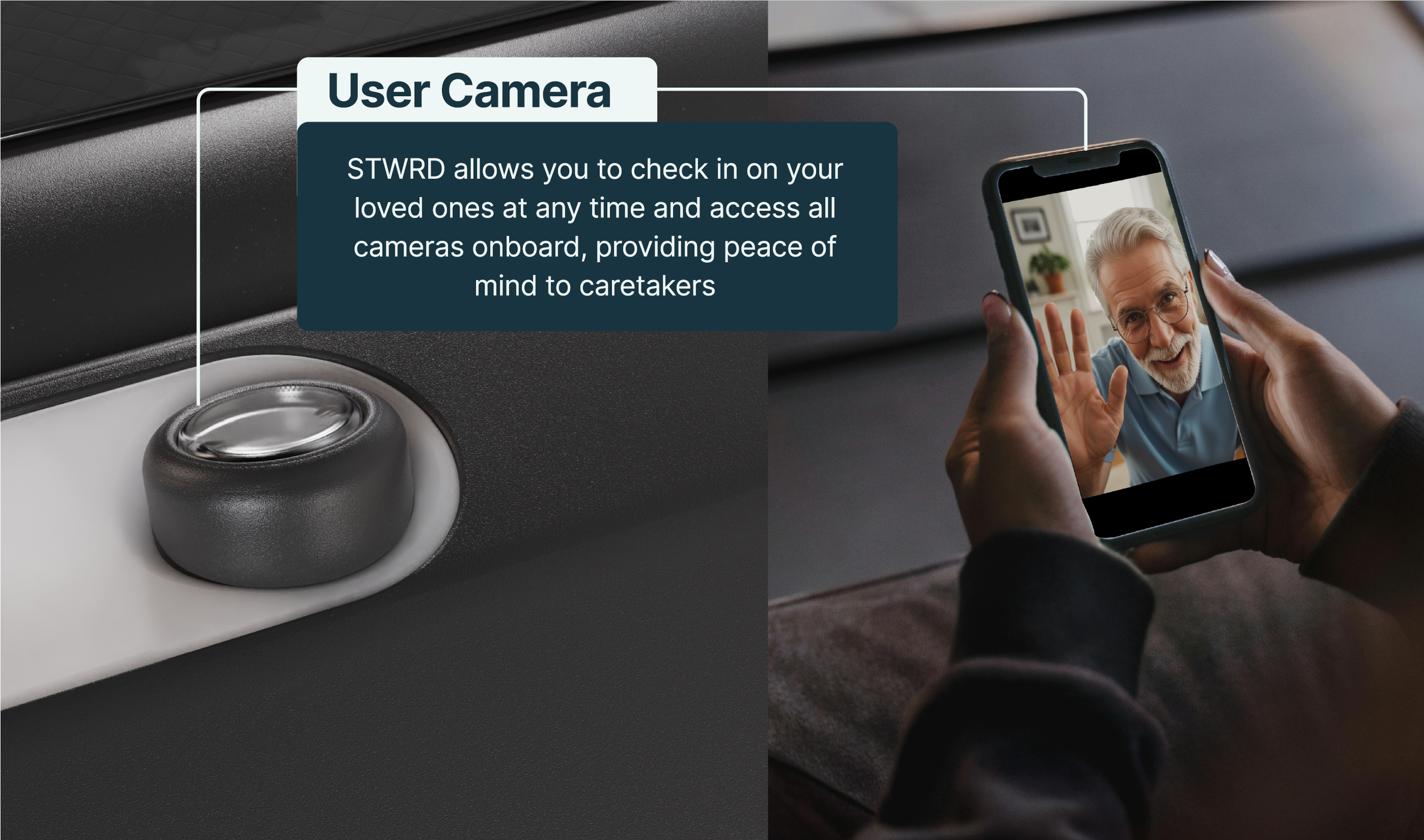
Cameras aren’t just meant for emergency detection, they are way for caregivers and loved ones to check in and monitor the STWRD user. Check in remotely to see the users surroundings and speak through the app using the user facing camera.
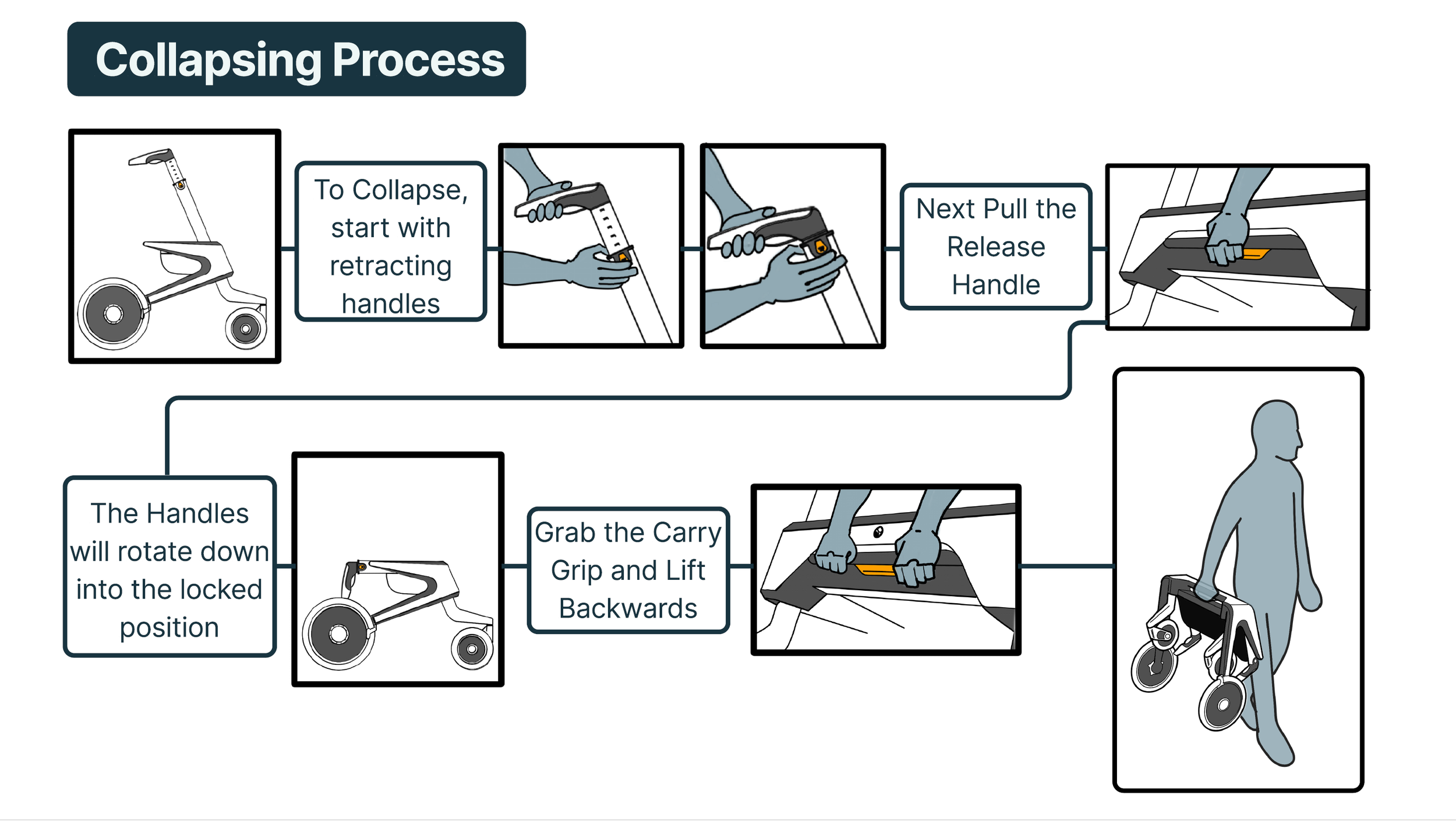
The collapsing process is meant to be as simple as possible. Collapse the handle, or don’t depending on the situation, pulling the orange release at the front of STWRD and then lifting by the grip located in the same area will collapse the front wheels and handles, allowing STWRD to be carried like a briefcase.
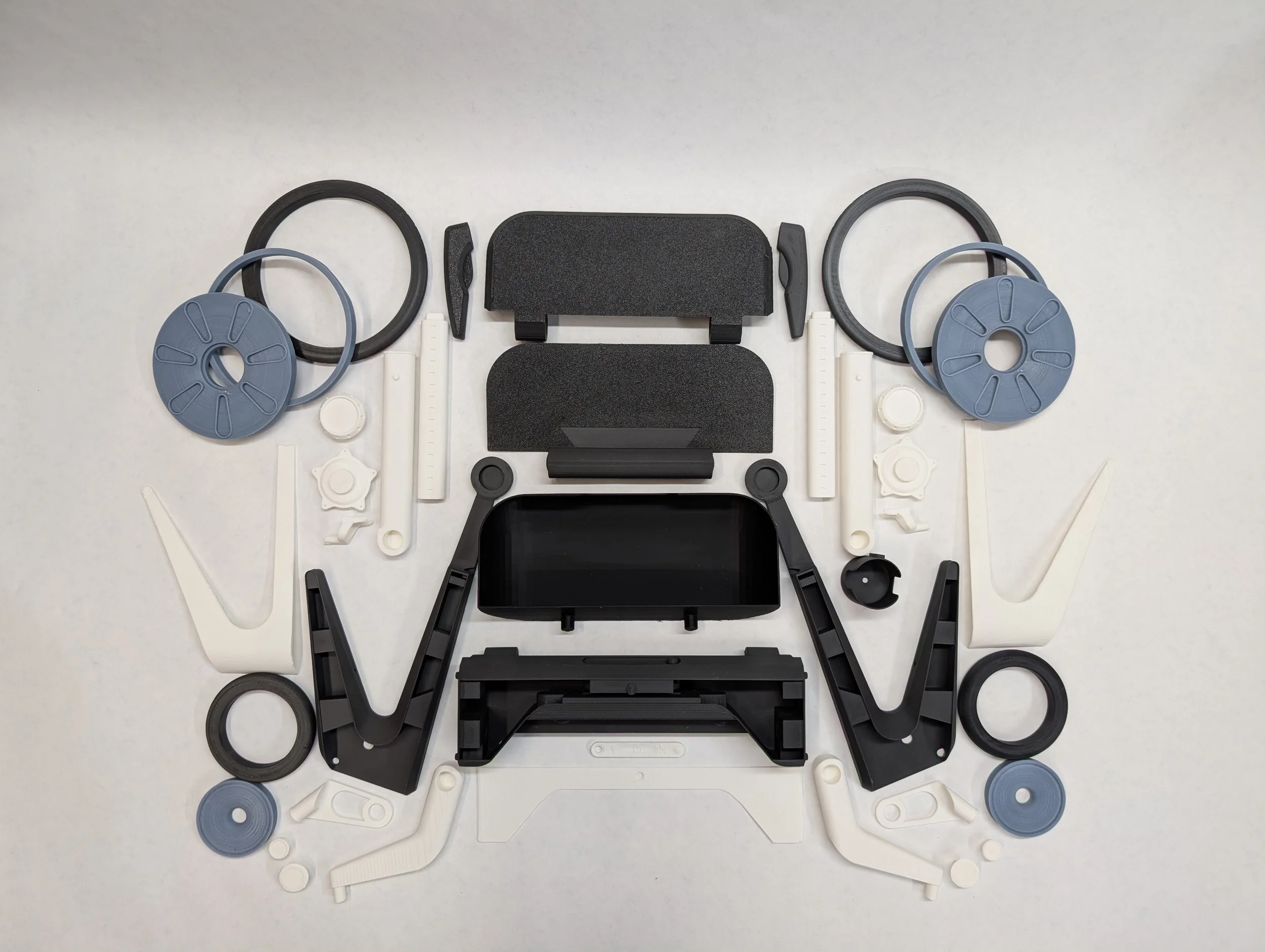
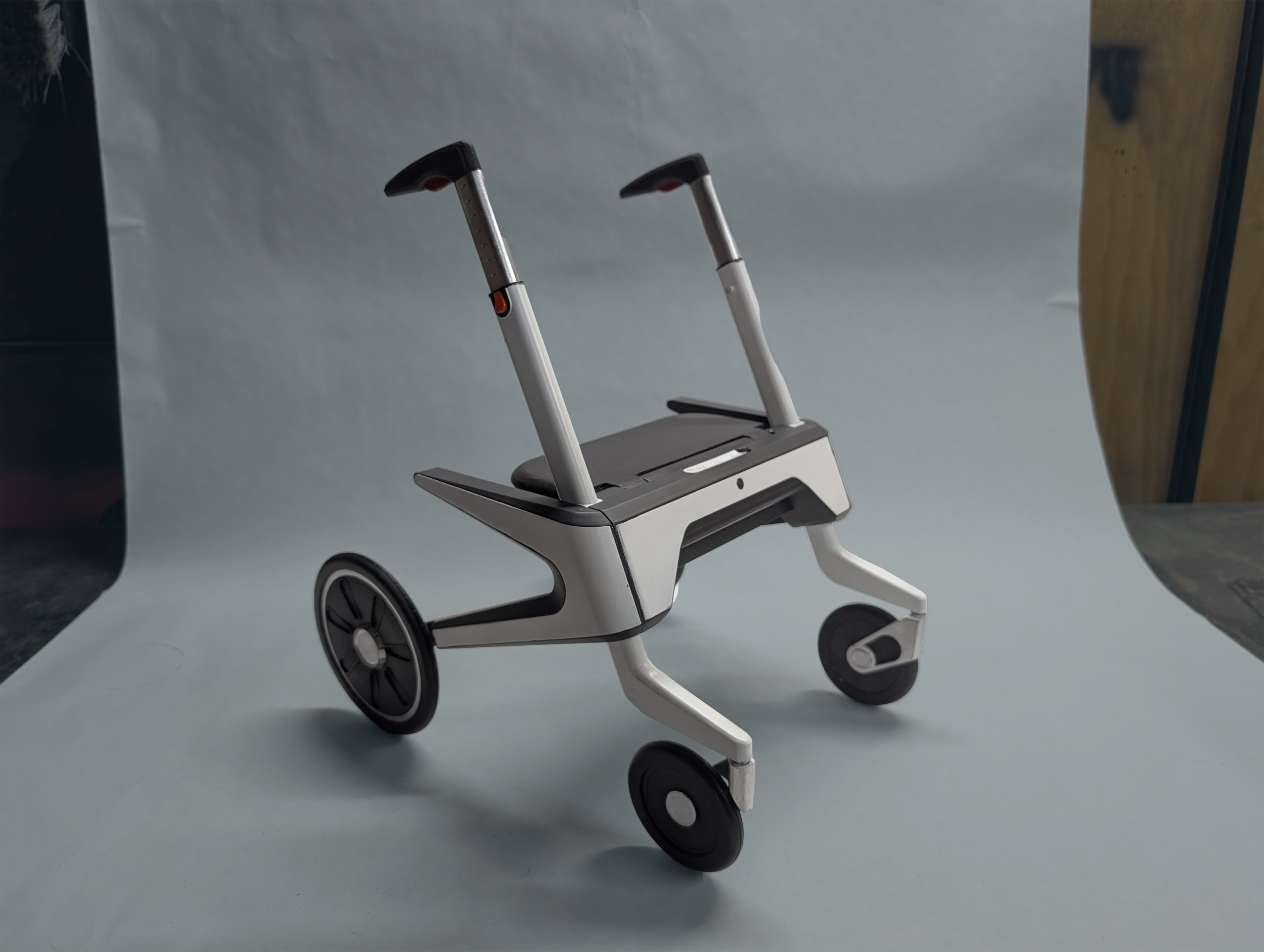
Modeling
The STWRD CAD model was adapted for 3D printing and scaled down to 40%. A Dummy Model was scaled to mimic a person standing at 5ft 10in in order to properly show the interaction with a person. Modeling was key for in person presentation of the product and did well at showing function and user interaction.
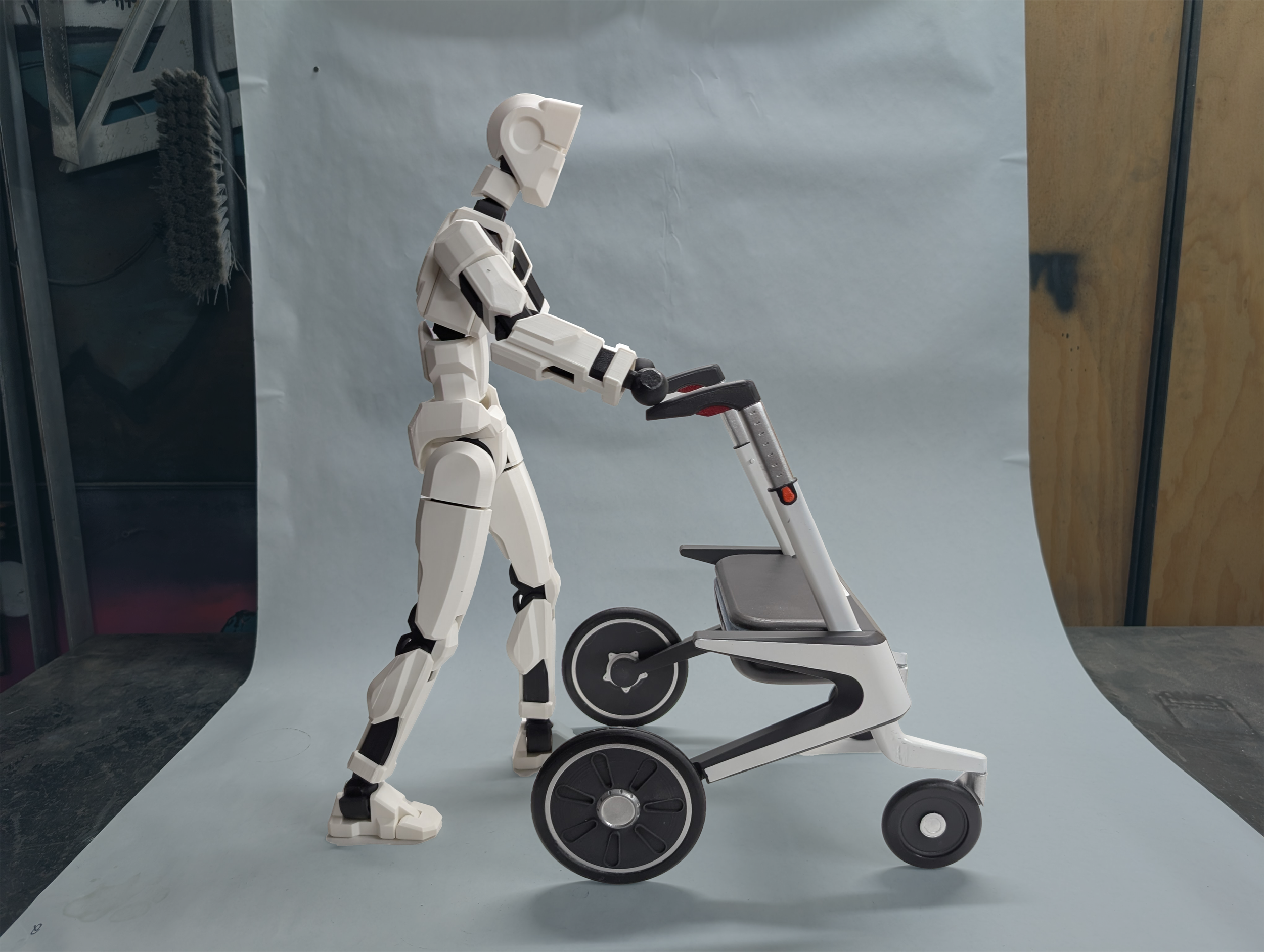
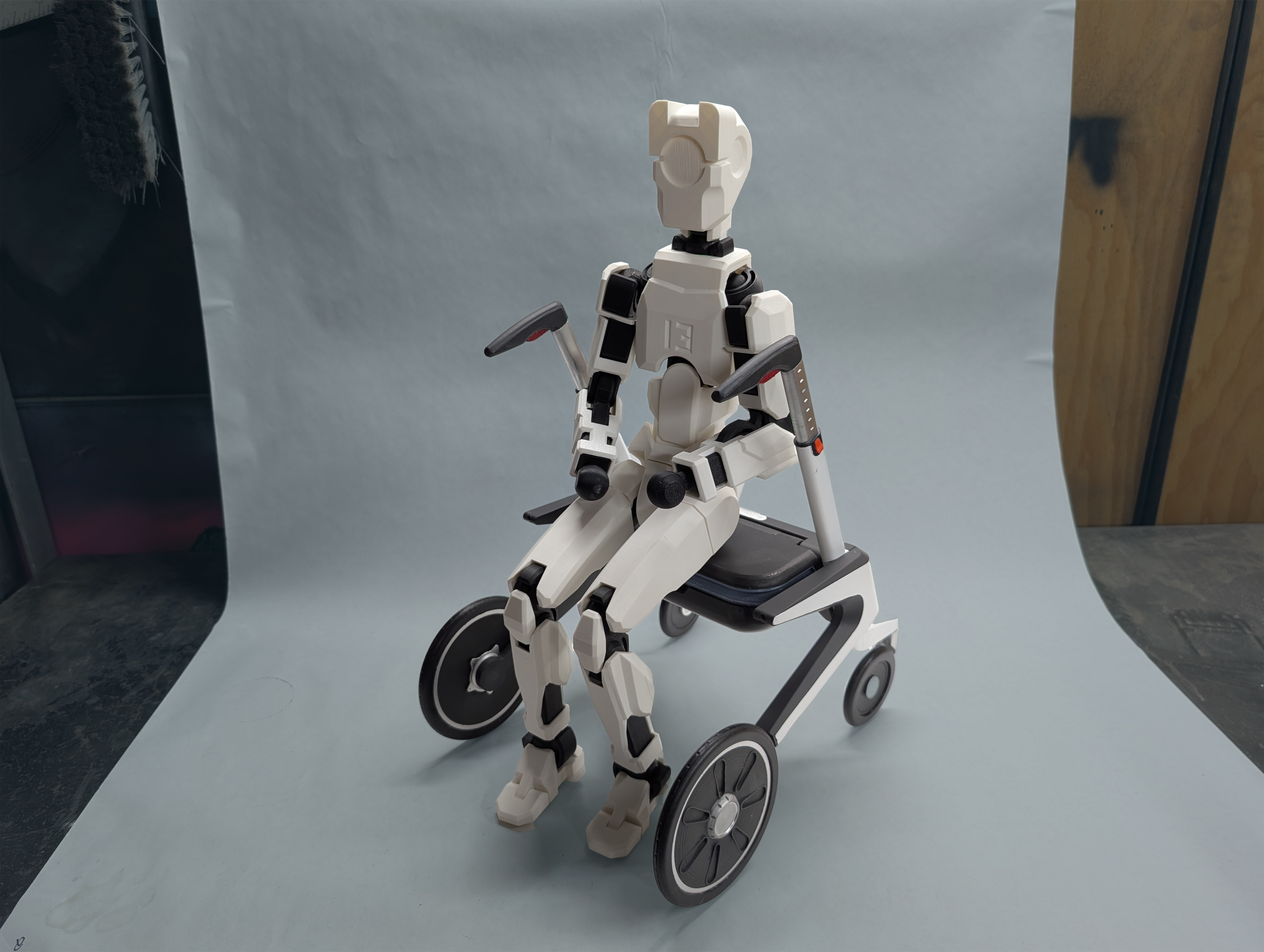
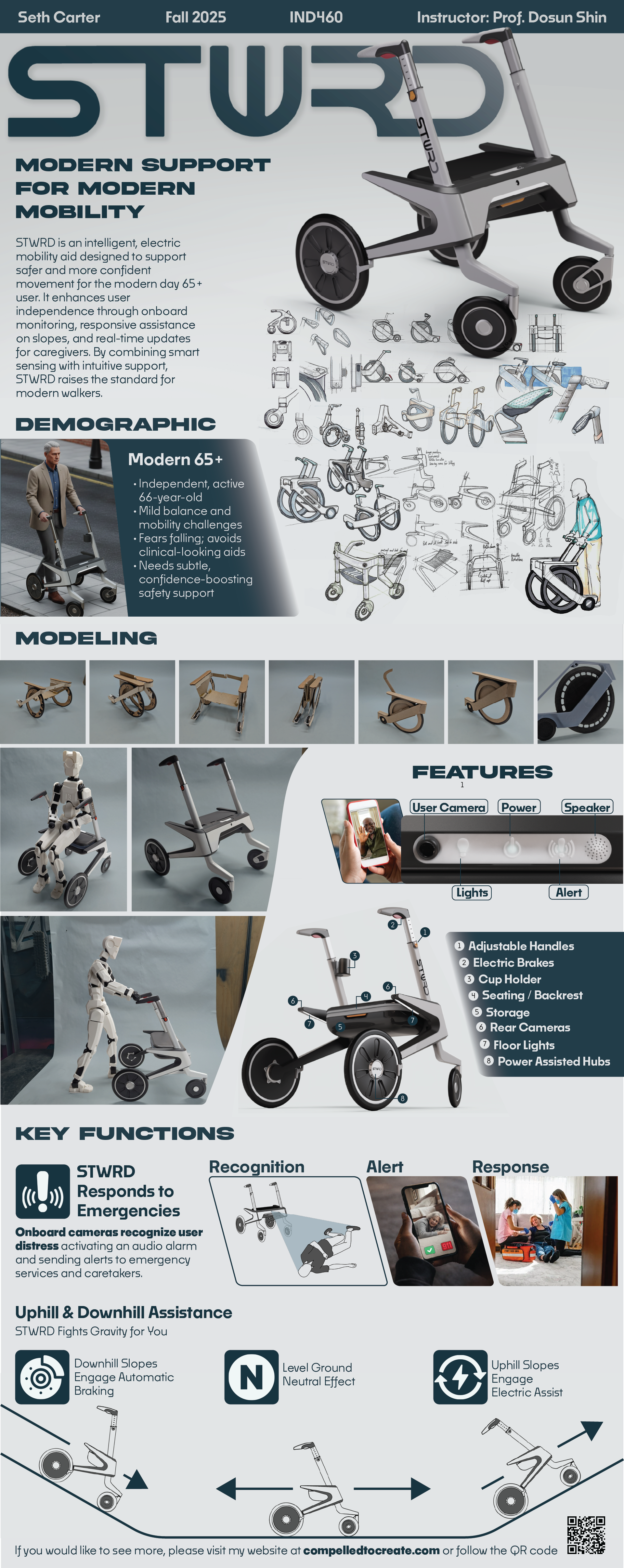
In the Fall Semester of 2025, STWRD was chosen for a design excellence award by ASU faculty and Professional reviewers.
I was asked to create a display poster to be hung in the design building and at upcoming design events. If only my graphic design skills were stronger.
I was elated to have been praised for my work. There is always room for improvement and this project has much more room to grow. One day I would be happy to return to STWRD to improve the design and flush out the internal engineering.